
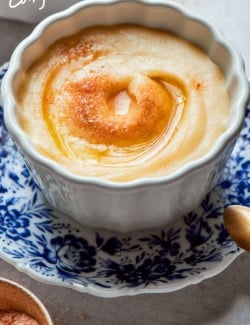

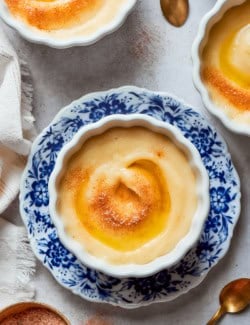
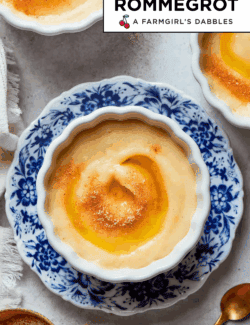
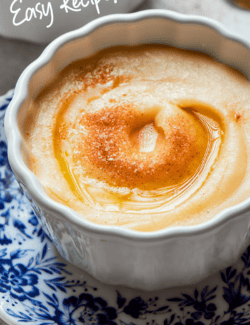
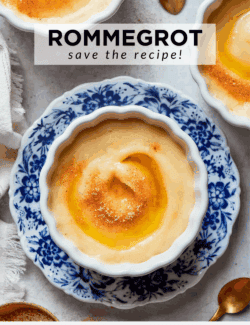
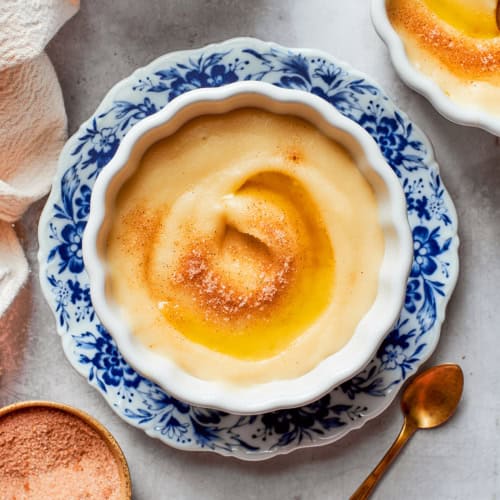
Rømmegrøt is a warm Norwegian porridge recipe, similar to a rich milk pudding, that’s delightful with a drizzle of melted butter and a good sprinkling of cinnamon-sugar over the top. Enjoy it as a hot breakfast, side dish, or dessert!
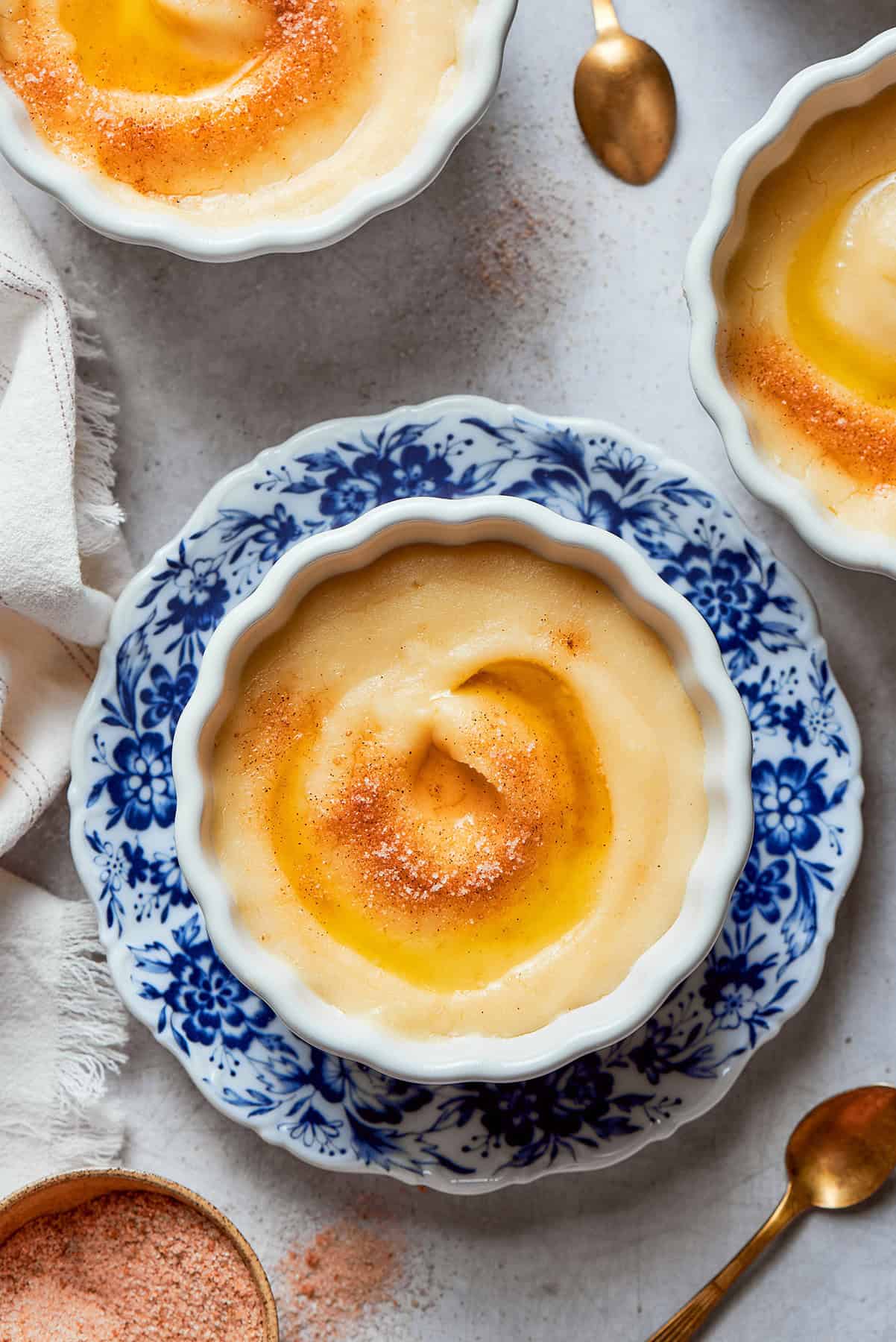
This easy Rømmegrøt recipe is a beloved piece of my husband’s Norwegian family tradition. It’s simple, basically a creamy Norwegian porridge or pudding. My mother-in-law taught me to enjoy it with melted butter and a hefty sprinkle of cinnamon sugar over the top. We make this all year ’round as a cozy breakfast, side dish, or dessert, and especially like to make it during the holidays.
Why We ❤️ Love This Rømmegrøt Recipe

I have an affection for special family recipe traditions. At Christmastime, Mom’s soft & tender caramel rolls, Grandma Klein’s chocolate caramels, and Grandma Renelt’s oyster stew stand out for me, with my mostly-German heritage. Rømmegrøt, however, is from my husband’s side of the family (he is 75% Norwegian, 25% Swedish), and this has been a happy, delicious tradition addition. (Just don’t ask me to try lutefisk!) Here’s why we love this recipe:
- So simple. The ingredients list is super short, with only milk, flour, sugar, and salt. Plus melted butter and cinnamon-sugar for topping individual bowls.
- A year-round dish. While I most often make rømmegrøt during the cold months, and especially for Christmas, we do make it all year ’round. In Norway, rømmegrøt is often served during summer holidays!
- Versatile. Enjoy rømmegrøt for breakfast, or as a side dish or dessert. You can serve it more like a sweet pudding, with fresh fruit and other toppings. Or leave off the cinnamon-sugar topping and serve it with meat.
To learn more about where this recipe comes from and my first experience eating it at Sons of Norway in Fargo, ND, scroll to the bottom of this post, right after the recipe card!
Enjoy!

What Is Rømmegrøt?
Rømmegrøt is a Norwegian porridge that is thick and sweet and always served warm. It’s made with sour cream, as “rømme” translates from Norwegian as “sour cream” and “grøt” translates to porridge. So, for us non-Norwegians: “sour cream porridge”.
That said, there are many recipes that do not use sour cream, that use whole milk or cream instead, and still call it rømmegrøt. It all comes down to the traditions of specific families and regions. And for my husband’s family, they have always use whole milk – or heavy cream, if they’re feeling particularly indulgent. Technically, this would then be called fløtegrøt or fløyelsgrøt.
No matter the dairy you use, this dish is wonderful served with melted butter and cinamon-sugar, and you’ll often see it in Norway accompanied with cured meats. I love that you can enjoy rømmegrøt with both sweet or savory sides, or just spoon it up for a decadent breakfast option.
“It tastes like a warm bowl of sugar cookie, it’s Divine – why isn’t this a thing everywhere?!”
Crystal
What is Rommegrot Made of?
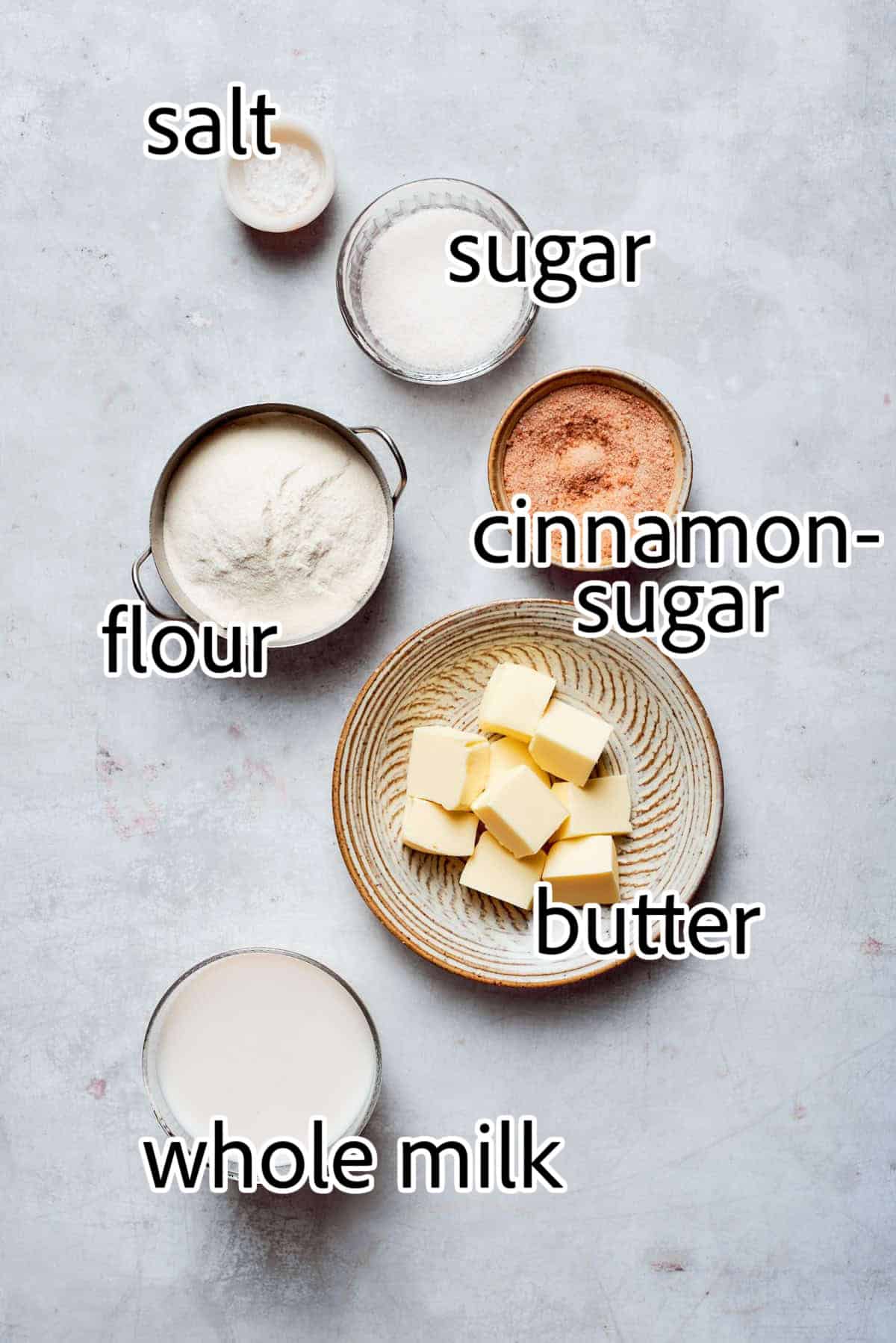
Here’s what you’ll need to make this rømmegrøt recipe that’s part of Blake’s family tradition. Scroll down to the printable recipe card at the end of this post for the exact ingredient amounts.
- Milk – I was taught to make rømmegrøt with whole milk, at the approval of both my husband and my mother-in-law. I’ve given some substitution suggestions lower down if you want to experiment with using other milks or sour cream.
- Flour – This recipe calls for all-purpose flour. Use the spoon & level method to measure the flour for the best accuracy.
- Sugar – A scant amount of sugar adds a little sweetness. You can adjust this as necessary.
- Salt – A little bit of salt helps to draw out the simple flavors in this recipe.
- Butter – I like to use salted butter for this recipe, for added flavor. Don’t skimp on the butter, as this adds rich flavor and texture. And then offer extra melted butter on the side, at serving time.
- Cinnamon-sugar – To sprinkle over individual bowls of pudding.
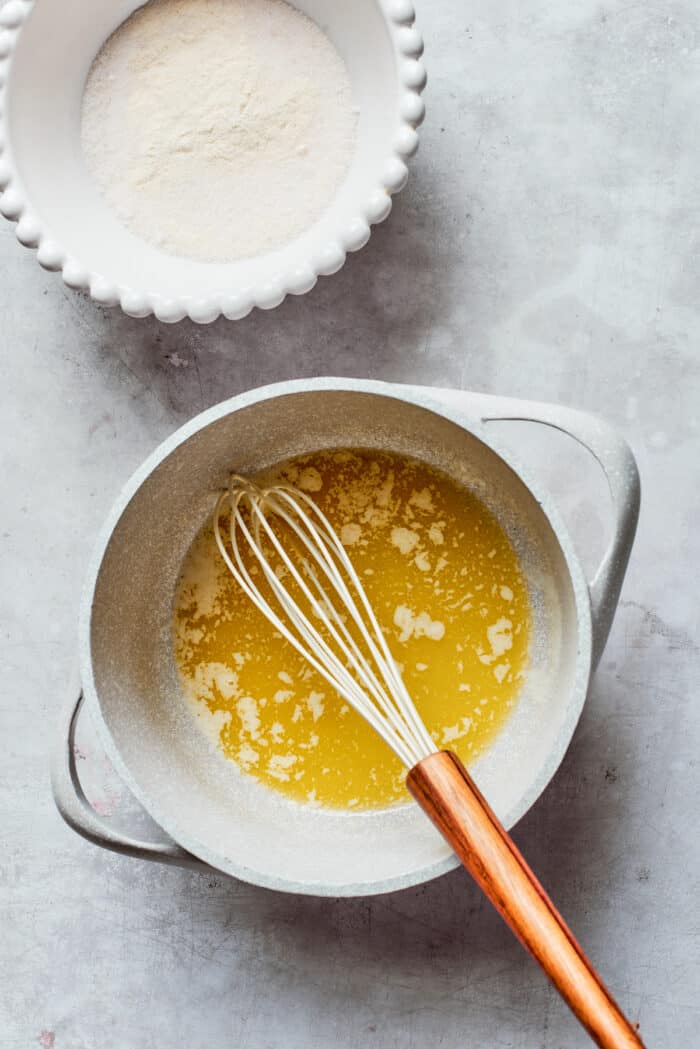
Melt butter.
How To Make Rømmegrøt
So, here you go. Here’s how we make rømmegrøt! Find the detailed instructions in the recipe card lower down.
- Heat milk. First, heat the milk to 195°F, stirring continuously.
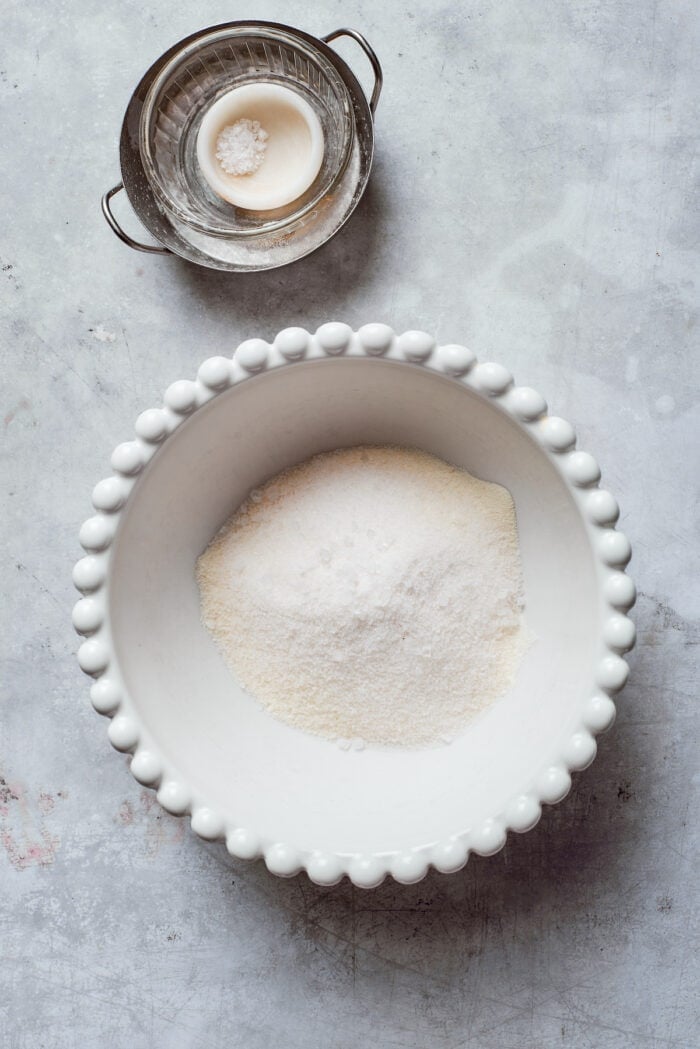
- Whisk dry ingredients. Combine the flour, sugar, and salt in a small bowl.
- Melt butter. Melt the butter in a small saucepan over medium heat.
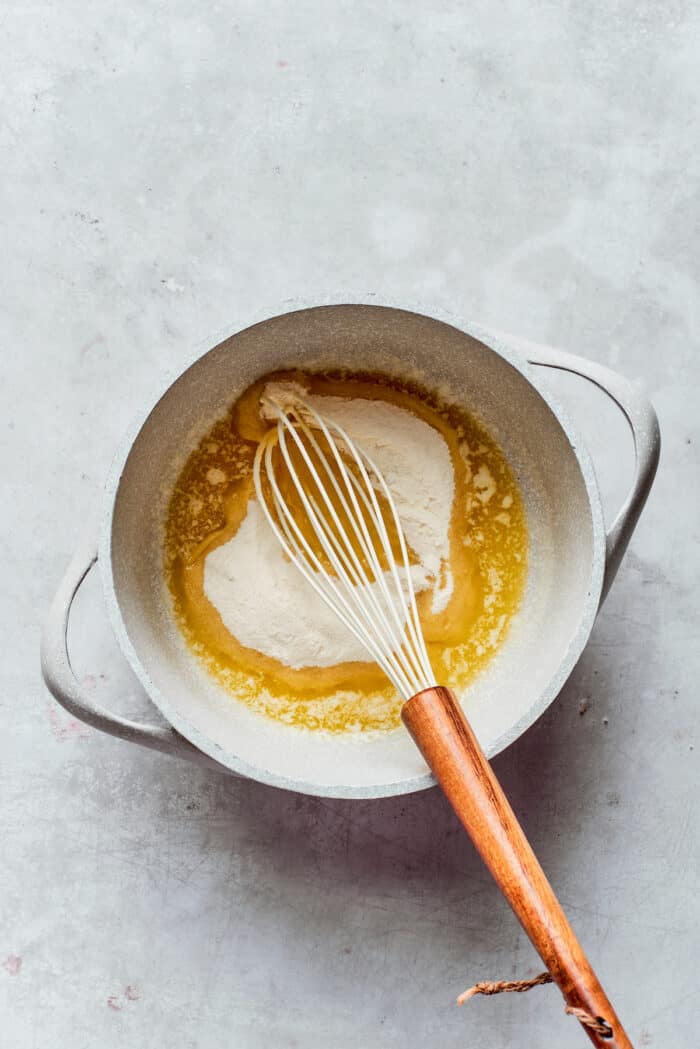
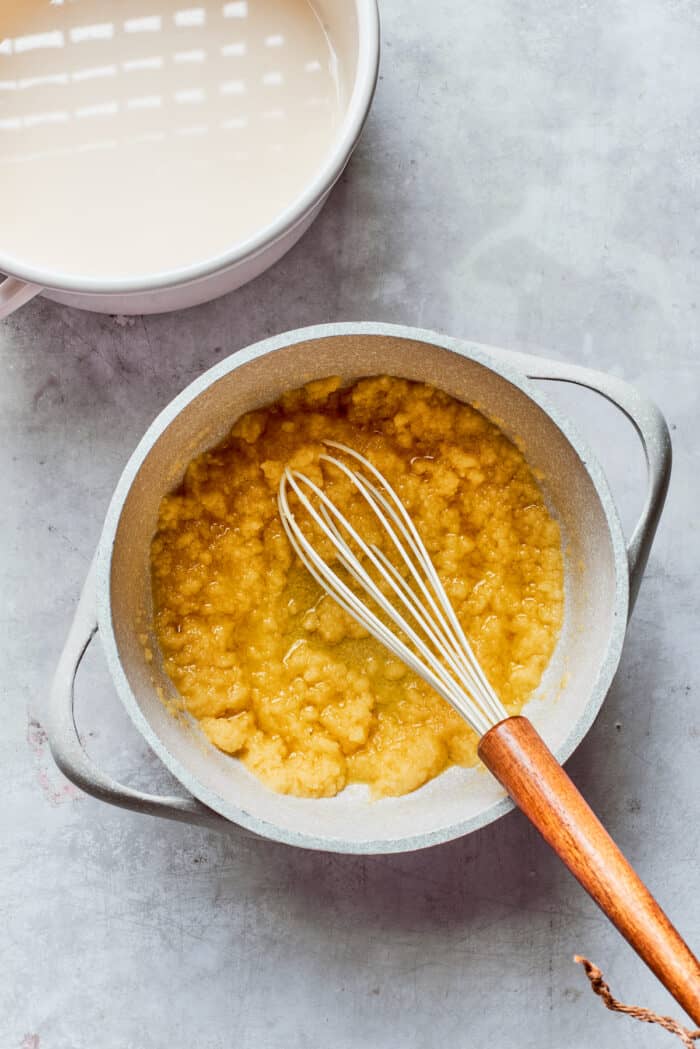
- Add flour. Whisk the flour mixture into the melted butter.
- Cook. Keep cooking the flour and butter mixture until it forms a thick paste.
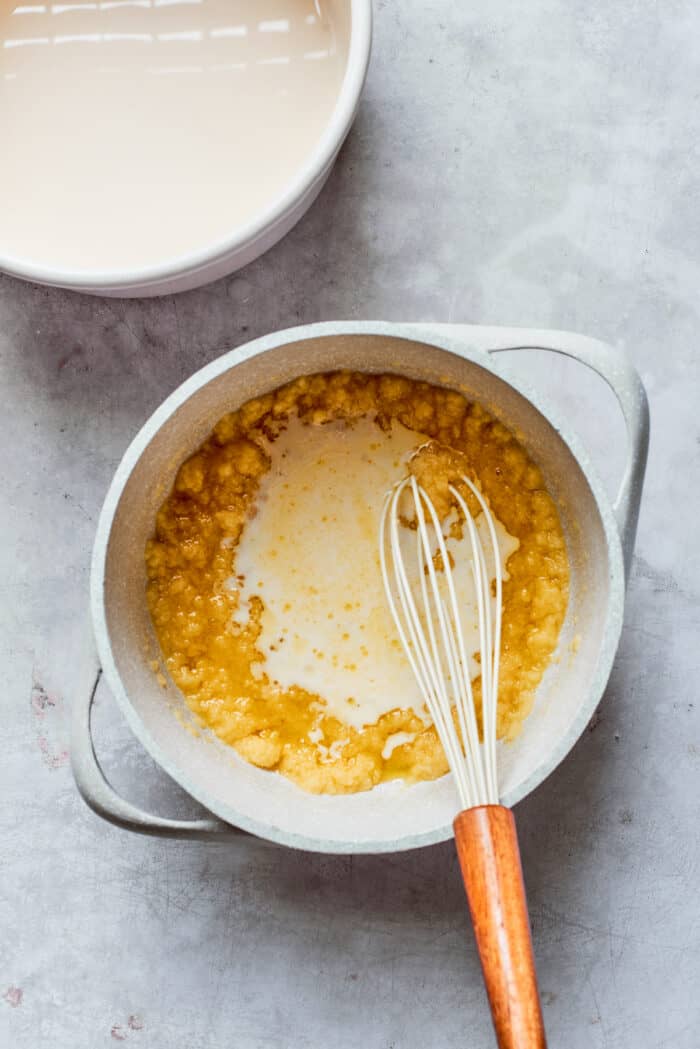
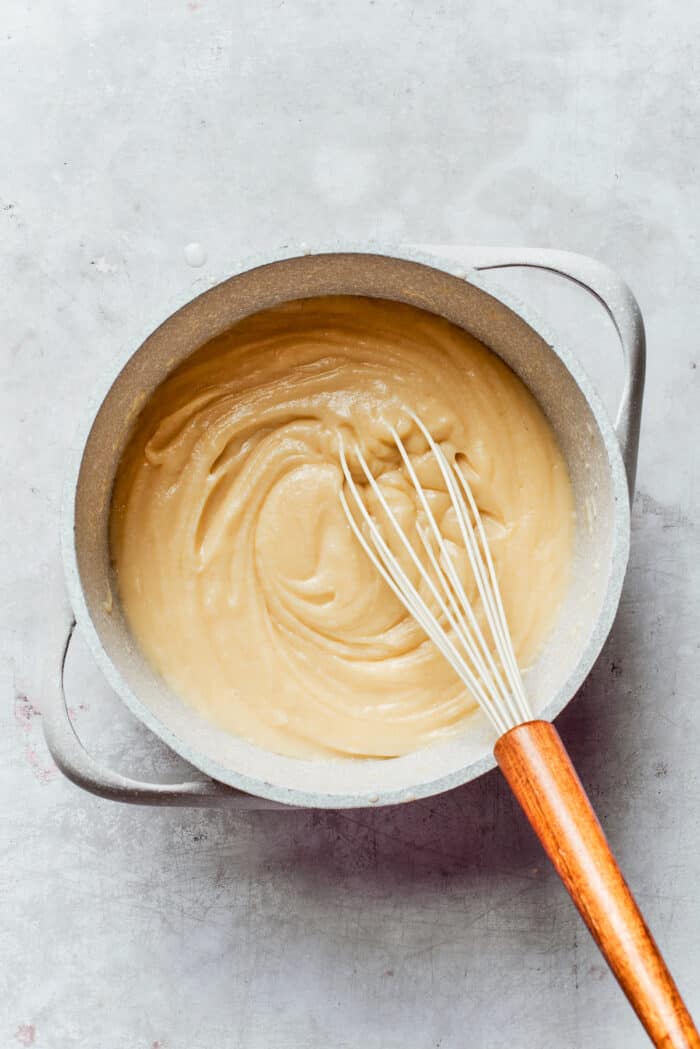
- Combine with milk. Mix the heated milk with the flour-butter mixture, stirring constantly, until the milk starts to boil.
- Cook on low. Turn the heat down to low and cook for 5 minutes more, until smoothed-out and thickened, like a thick pudding.
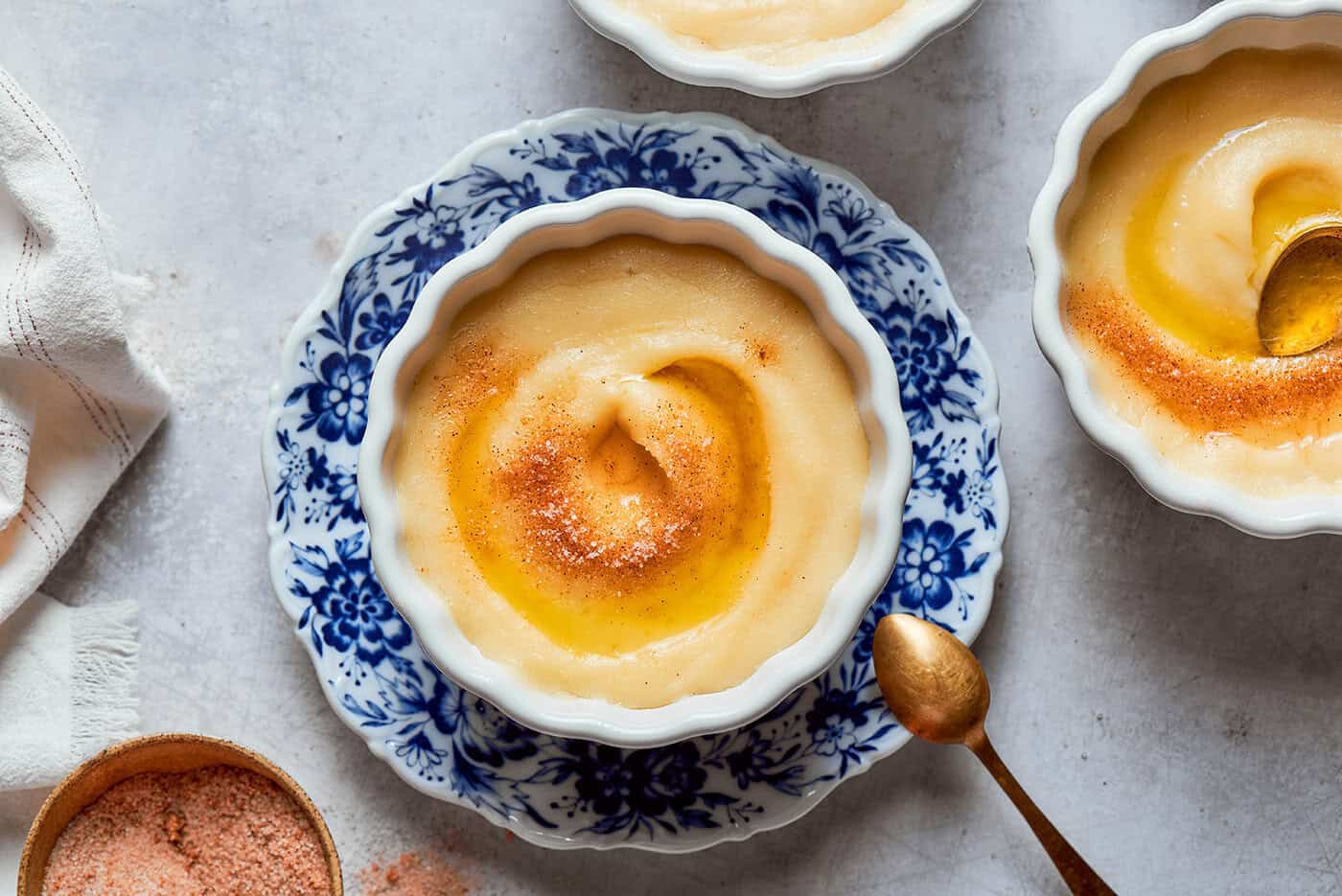
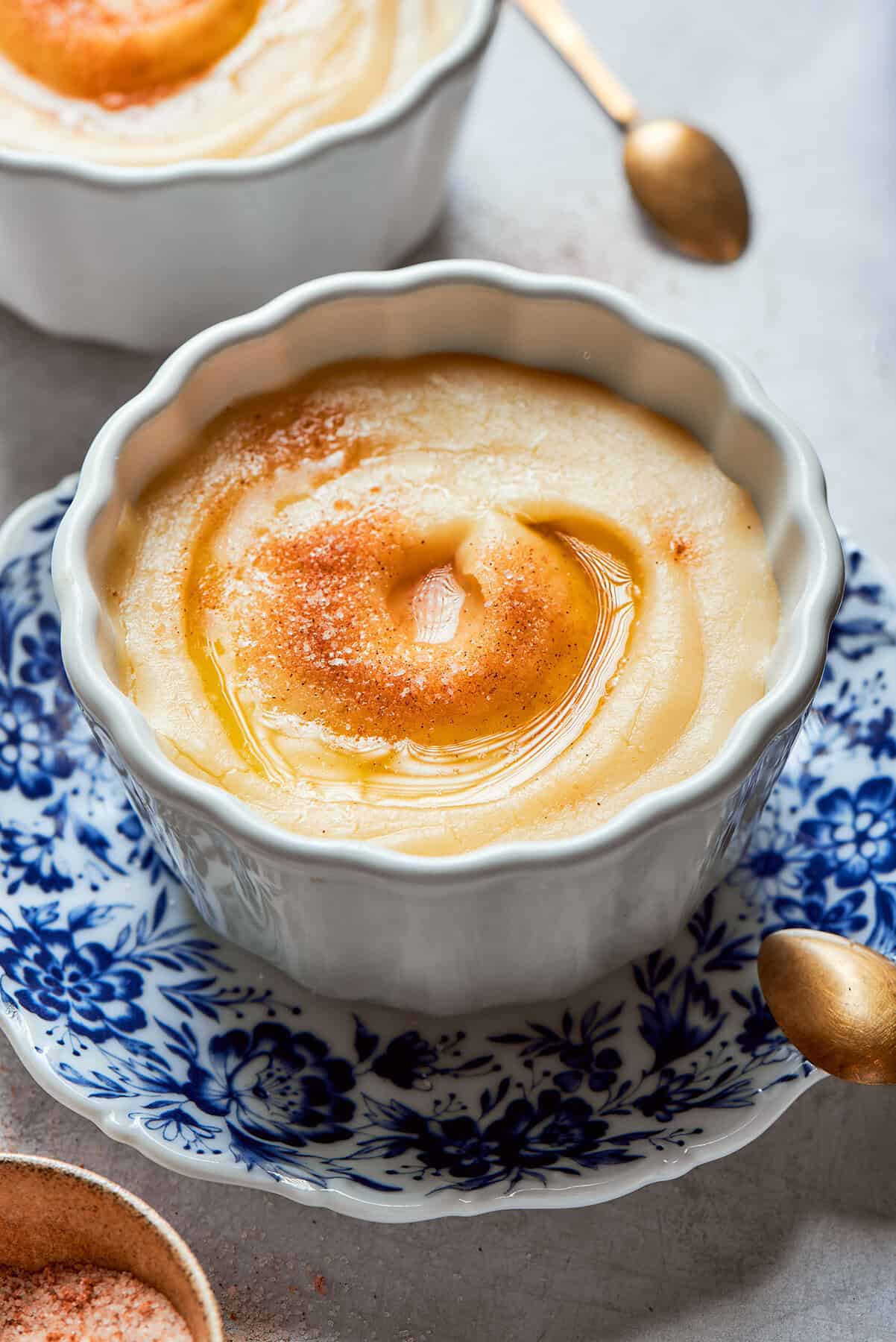
- Serve! Spoon rømmegrøt into individual bowls, drizzle warm melted butter over the top, and sprinkle with a good amount of cinnamon-sugar.
Tips for Success + Variations
Rømmegrøt is not at all fussy, but here a few helpful tips to keep in mind as you make this dish:
- Whisk it well. For the smoothest, creamiest porridge, whisk the flour very well with the milk. You want to eliminate any lumps, so keep whisking until it’s very smooth.
- Cook it long enough. Similar to a roux, when you cook flour and butter together to form the base of a sauce, rømmegrøt needs to be cooked long enough so that the flour cooks fully. Bring the flour-milk mixture to a true boil before lowering it to a simmer, then simmer it for at least a full five minutes so that the flour doesn’t taste raw.
- But do not overcook. After you’ve whisked the milk and flour together, keep stirring the porridge as it cooks, scraping the bottom of the saucepan. This will ensure that the milk doesn’t overcook or burn.
- Use a thermometer. For the best, most consistent results, use an instant-read thermometer to easily tell when the milk reaches the proper temperature of 195°F.
- Try heavy cream. You can substitute the whole milk for heavy cream, for a much richer rommegrot. Or try swapping out just 1 cup of the milk for 1 cup of heavy cream.
- Or use skim milk. For less richness, use skim milk. My MIL shared with me that her three boys asked her to switch from cream to skim milk…because they wanted to eat more of it!
- Add sour cream. To make a more traditional version of rømmegrøt, swap out 1 to 2 cups of the milk for full-fat sour cream.
How to eat rømmegrøt?
Blake’s mom, Loree, recalled her own mom making this dish whenever there was excess cream from milking the cows – which provided an inexpensive way to put food on the table. Most often, they enjoyed it these two ways:
- as a side dish: a special treat (especially during the holidays) topped with melted butter and cinnamon sugar
- as a simple meal: served plain with soda crackers for dipping, along with a glass of milk
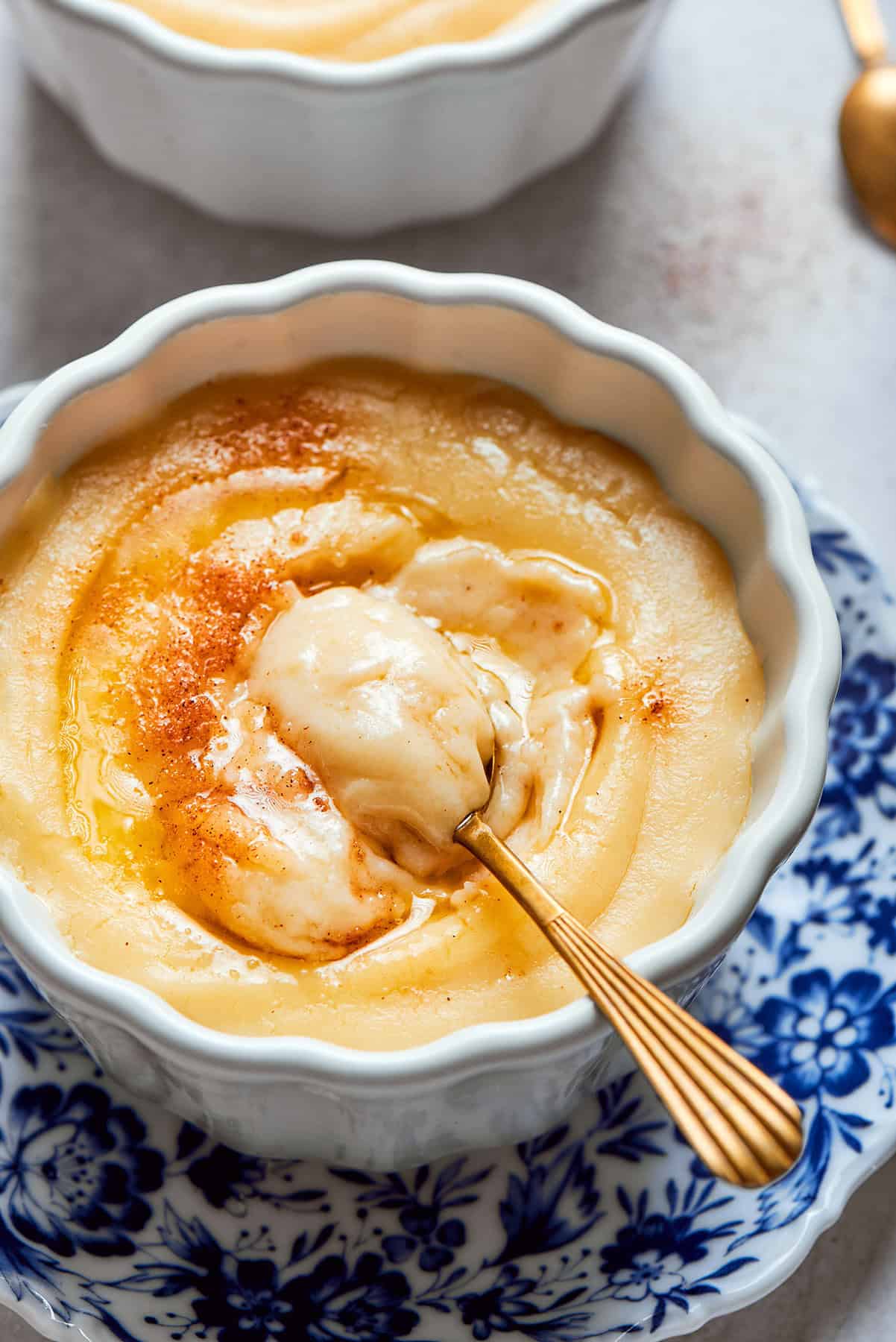
Loree most often served rommegrot to her own family with melted butter + cinnamon-sugar. The first time I enjoyed it myself, she advised me, with a twinkle in her eye: “Eat it with a spoon. First skim off the top crusty layer of sweet cinnamon-sugar. Then add another layer of cinnamon-sugar and repeat. Continue to repeat – until you see the bottom of the bowl!”
What To Serve With Norwegian Porridge
There are many ways to enjoy this porridge, besides the way my MIL taught me (above). Here are a few more ideas for you:
- Toppings. You can think of rømmegrøt a bit like oatmeal, and add toppings such as berries, raisins, nuts, seeds, nut butter, maple syrup, honey, or a spoonful of jam. Try my raspberry blackberry freezer jam or strawberry freezer jam.
- As a side dish. Rømmegrøt is served mostly as a side dish in Norway, beside fish or meat, especially ham, and various cured salamis and sausages.
- With juice & flatbread. I’ve also read that Norwegians like to eat rømmegrøt with a glass of raspberry juice, plus cured meat and Norwegian flat bread.
Proper Storage
Here’s how to easily store and reheat any leftover porridge:
- Fridge – Place cooled leftover rømmegrøt in an airtight container and store it in the fridge for up to 4 days.
- Reheat – Gently rewarm the rømmegrøt in a saucepan over medium-low to low heat. Or place it in a microwave-safe bowl with a loose cover to prevent any splatter, and heat it in 20-second increments, stirring after each time, until heated through.
More Side Dish Recipes To Try
Rømmegrøt
Ingredients
- 1 quart whole milk
- ¾ cup all-purpose flour
- ¼ cup granulated sugar
- ⅛ teaspoon Morton kosher salt
- ½ cup salted butter, plus more for serving
- cinnamon-sugar
Instructions
- Set a large heavy-bottomed saucepan over medium heat. Using a kitchen thermometer, heat milk to 195°F. Stir almost continuously, scraping the bottom of the pan, so the milk does not burn.
- While milk is heating, whisk together flour, sugar, and salt in a small bowl. Set aside.
- While milk is heating, gently melt butter in a small saucepan over medium heat. Turn off heat and hold until milk has reached 195°F.
- Once milk temperature has reached 195°F, stir flour mixture into melted butter to form a thick paste. Add this to the heated milk, stirring constantly, until milk starts to boil. Then turn heat down to low and let cook for 5 minutes more, stirring often. The mixture should be smoothed-out and thickened, like a thick pudding. Remove saucepan from heat.
- Spoon rømmegrøt into individual bowls. Drizzle warm melted butter over the top and then add a hefty sprinkle of cinnamon-sugar. Enjoy right away!
Notes
Nutrition Information:
my First Rømmegrøt Experience

It was a cold March day, sun-less and dreary, when we visited the Sons of Norway in Fargo, North Dakota with Blake’s family.

Inside, the dark paneled walls displayed Norwegian ancestry everywhere we turned. There were whimsical wood troll carvings, beautiful rosemåling pieces, gigantic framed paintings of valiant Vikings, and oh-so-lovely wallpaper designs.
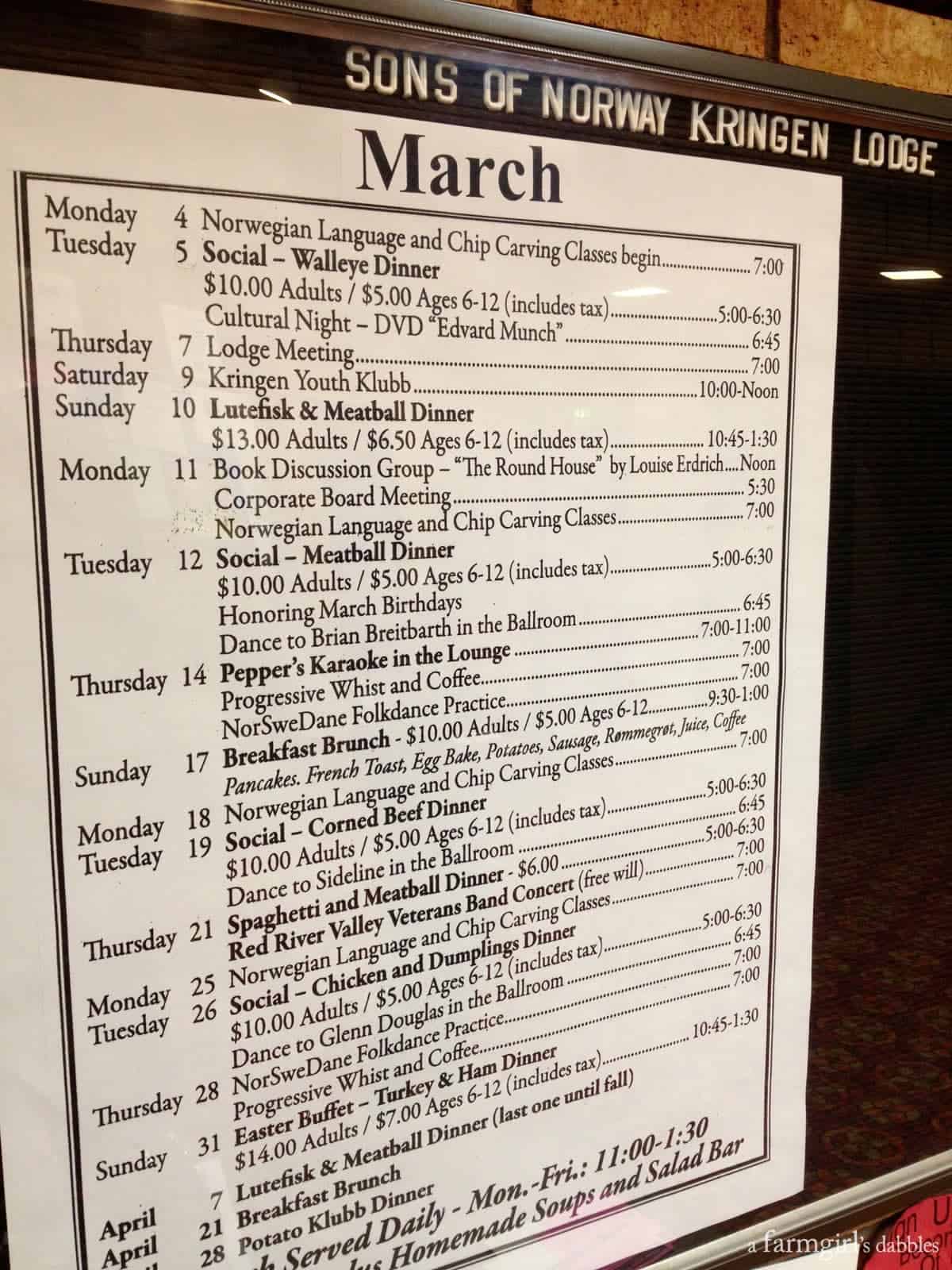
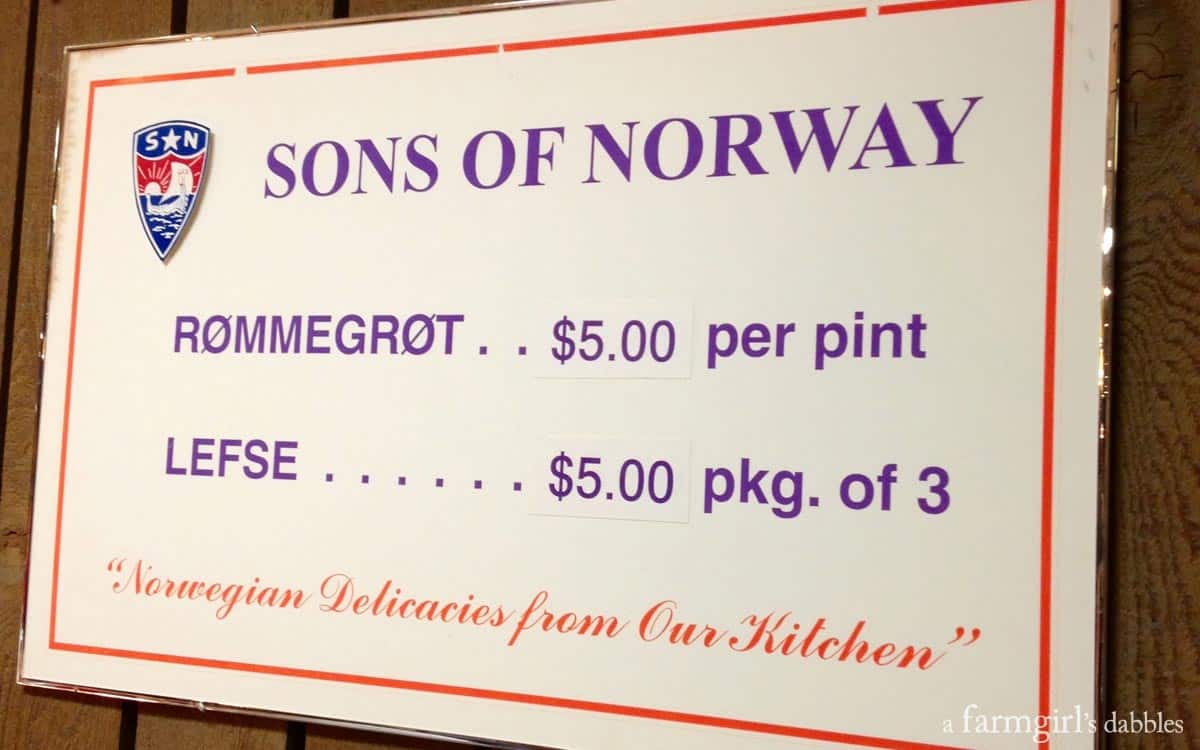
It was there that I experienced rømmegrøt for the first time.
A kind lady handed me a bowl of the simple, warm Norwegian pudding, and then advised me to pour some melted butter over the top, followed by a generous sprinkling of cinnamon sugar…the very same advice my mother-in-law had already given me.
After finishing bowl #1, I went back for bowl #2…with more butter and more cinnamon sugar the second go ’round. That stuff was wonderful!
A Shared Rømmegrøt Recipe
Then I asked one of the servers if they might be able to share their rømmegrøt recipe with me. Because, first, I wanted to make this at home because it was so delicious. And, second, I wanted to preserve a bit of Blake’s heritage, to pass this tradition on down to our own daughters.
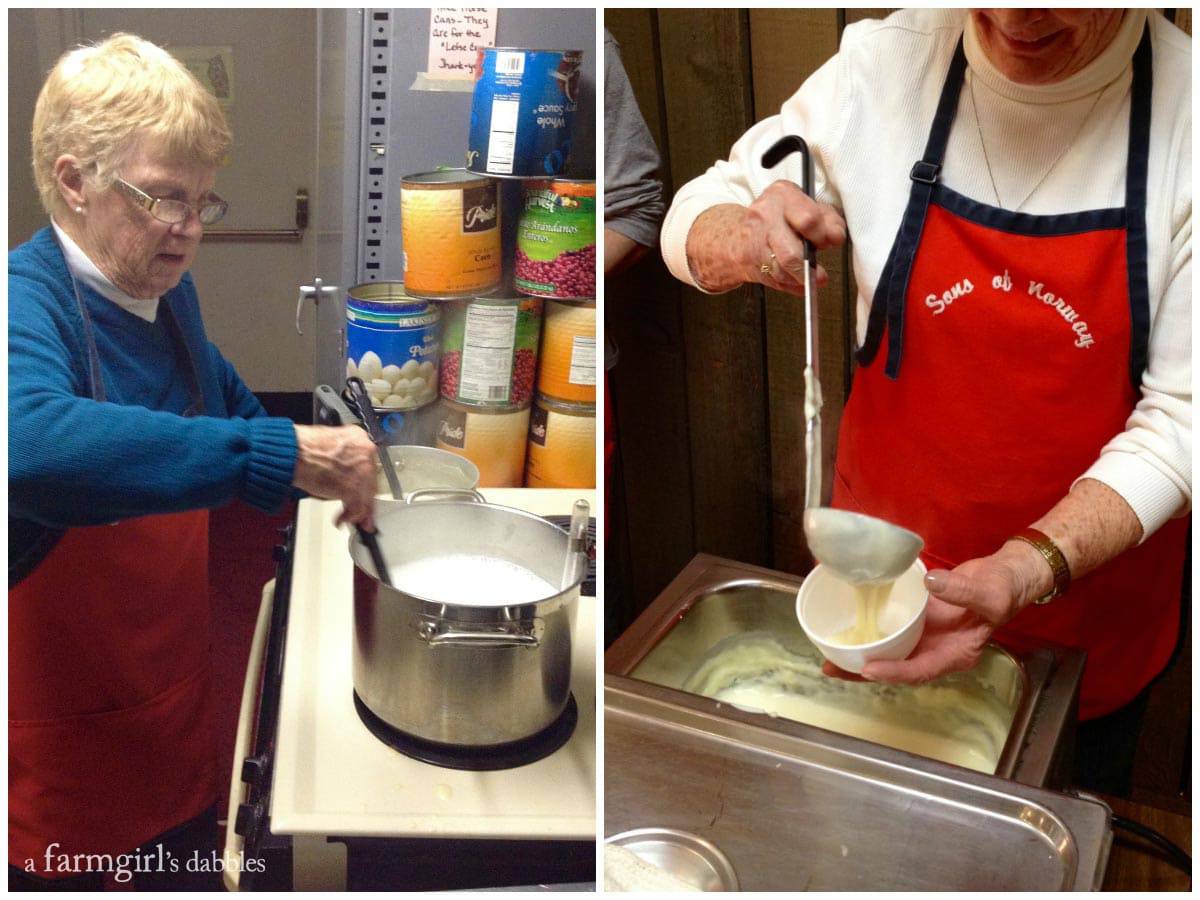
I was immediately invited back into the kitchen, where I met Vivian.
Standing at the stove with a red apron tied around her back, Vivian was stirring the thickening milk mixture, watching the thermometer rise. She chatted me through the recipe and was happy to share it with me – and that’s the recipe I’m sharing with you here!
This post was first published in 2016, then updated in 2024.

I made this for breakfast on Christmas morning! What a fabulous treat! I put the leftovers in the fridge covered in vanilla cinnamon and sugar. I had it cold the next day. It tasted like my Swedish grandmothers custard! Love it and thank you so much for posting this incredibly delicious recipe.
Thank you so much for coming back to let me know. SO FUN!!!
I love this story! (and the Rommegrot looks really delicious!)
I am a full Norwegian, my siblings and I were raised on Rommegrot. We ate is as a meal. It t was made with sweet cream and milk. The basic recipe is the same procedure as others have listed. We also used melted butter, cinnamon and sugar for a topping. Mom would make a huge kettle full, we all loved it. I made some for myself last week. Tasted just as it did when I was a kid!
This is what our Scandinavian ancestors would call milk mush. It was eaten for a meal. There was no cream in it. Romegrot is made from at least 50% cream!
Can you make this ahead of time and heat up in a crock pot??
I’ve never tried that, but love the thought of it. If you do try it, I’d love to hear how it turned out!
Yes, I help make it for my church bazaar and we make tons and put in roasters to keep warm then transfer to smaller crockpot for the serving line.
Fun to know! That’s exactly how it was served at the Sons of Norway, in big roasters. :)
My Nana used to pour rommegrot over some type of dense bread/cake for Christmas desert. Would anyone know what type of cake that would be? We are taking our kids to Fargo for a trip and I am putting together some of Nana’s recipes to make while we are there. Thank you!
I love that you’re doing this!
I was at Fargo Sons of Norway for lunch today and it was my first time sampling this. I was hesitant but was not disappointed. I wondered how it was made and yours was the first post I found. Thank you for sharing, I’m glad I stumbled across it.
That’s so awesome!! Thank you for leaving a note – I love to hear these kinds of stories. :)
I’ve heard nothing but good things about this! Thanks for sharing the recipe and the story. No matter what it is called, we’re looking forward to having this very soon!
Let me know know what you think!! :)
I haven’t made this specific recipe, yet. But in 1990 I made this from a recipe in Bon Appetite (?), and LOVED it. But I lost the recipe and the magazine stopped publishing. I am so excited, I get to make it again! Thank you!!!
Wonderful!! I hope you like this!
I just heard of rømmegrøt on Twitter, so looked it up and found this post. So I just tweeted a link to this post to the person on Twitter. This is such an interesting dish. I think she was planning to make it with sour cream.
Hello Jean – thank you for sharing!
Thank You for being a great wife and making a Norwegian history dish for your German husband…..
I am 100 % Norwegiam and we had this Rommegrote pudding as an appitiser before the main meal at Christmas and New Years…My dad use to cook it in a double boiler to prevent burning ….
I learned a new way of making it in an electric crock pot……
We use heavy whipping cream and sift in flour to thicken the pudding…I usually ad a little vanilla and almond flavoring…….We cook it 2-3 hrs a bit longer on a low setting…..till the butter cooks off to the top…My relatives would put the butter in a gravy type pour cup and ADD the butter back into the pudding ,,,and add cinnamon and sugar to taste,,,I thought they called it a “Poor mans pudding”
My Swedish mother in law thought it tasted like “School Paste”…… the old white kind…
My family and grand kids LOVE it any way we cook it…
THANK YOY for helping keep Norwegians eating GOOD stuff….Peter Aftreth Minnesota born…Alaskan by choice
I love the idea of adding a little vanilla and almond flavoring!!
I always thought the school paste tasted minty lol Thank you for the crock pot way!
Our family recipe also includes sifting flour into the whipping cream and constantly stirring until the butter had cooked out. Then scalded milk is added to get to a pudding consistency. Salt to the taste is added, followed by sugar. Once finished, the grot is transferred to the serving bowl, sprinkled lightly with cinnamon and sugar, followed by spooning the rendered melted butter on top. It’s labor intensive, but a labor of love in our family.
Scott— That’s exactly how my Norwegian-American friends made it for me when I was visiting their house years ago as a student.