
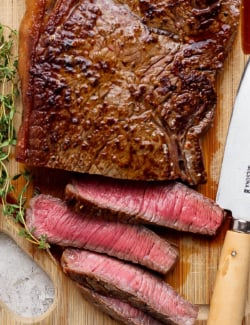
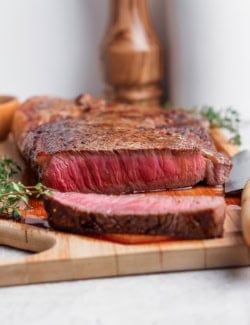
This Cast Iron Skillet Steak is juicy, tender, and perfectly seared to lock in flavor, with a rich garlic butter finish. If you’ve ever wondered how to cook steak on the stovetop, this method is tried and true, our family’s favorite “not grilled” method!
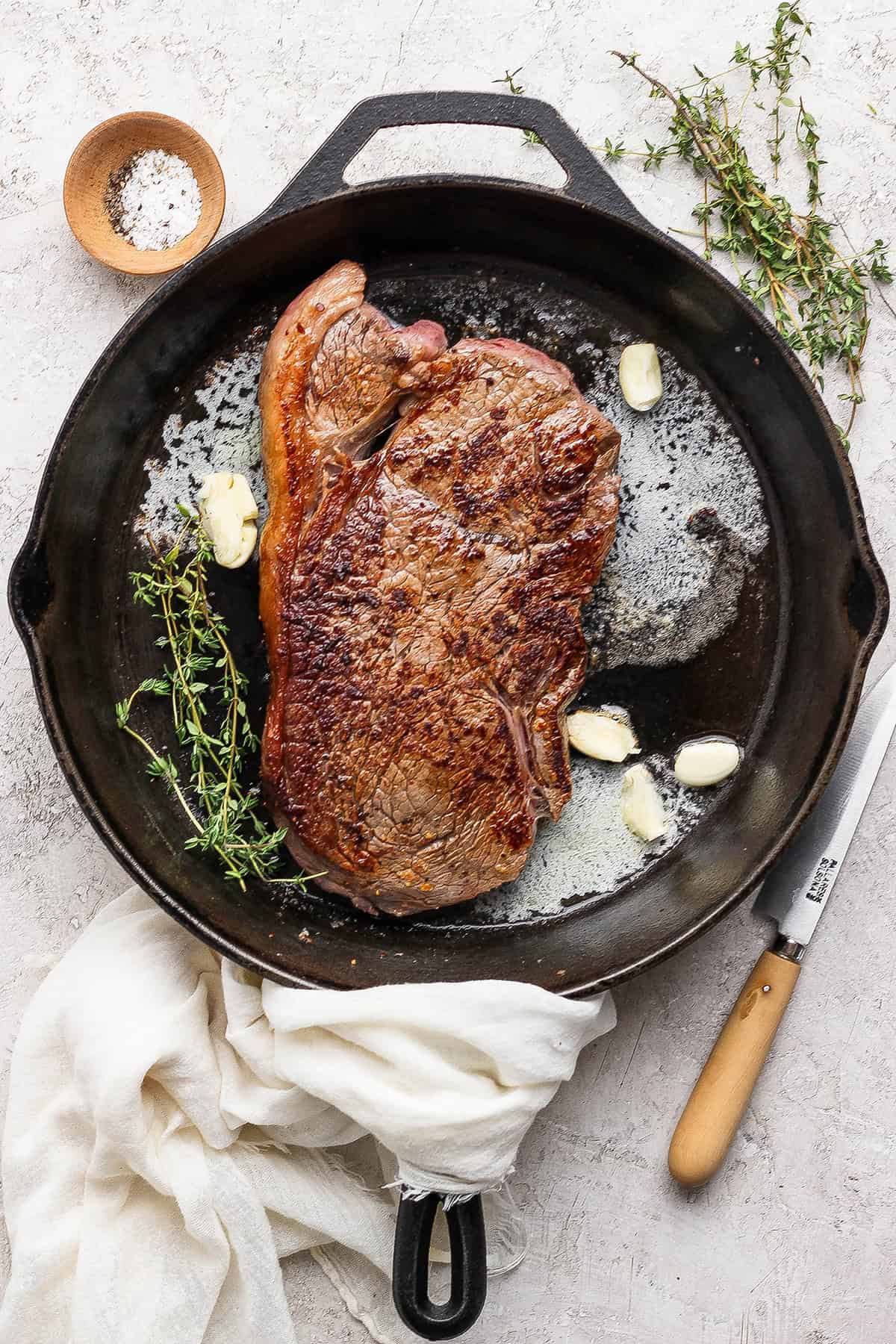
With a screaming-hot skillet, simple seasonings, and a quick garlic butter baste at the end, this easy Cast Iron Skillet Steak recipe guarantees a beautifully browned crust and a juicy, flavorful steak every single time. To make this already-awesome steak really stand out, serve it with my lightly creamy Mushroom Sauce for Steak!
Why This Stovetop Steak Method Works
Blake’s been experimenting with cooking steak in cast iron since we were first married. Over the years, he’s tested and tweaked, until he finally nailed down this method that we now rely on. When making his famous Sugar Grilled Steak or Grilled T-Bone Steak outside just isn’t happening (hello, Minnesota winters!). This is our go-to way to cook steak indoors, and it never disappoints.

What You Can Expect:
- Reliable method. Once you try this simple stovetop cooking method, you’ll use it again and again.
- Perfect sear. A blazing-hot cast iron skillet creates a golden-crusted exterior that’s such a pleasure to bite into.
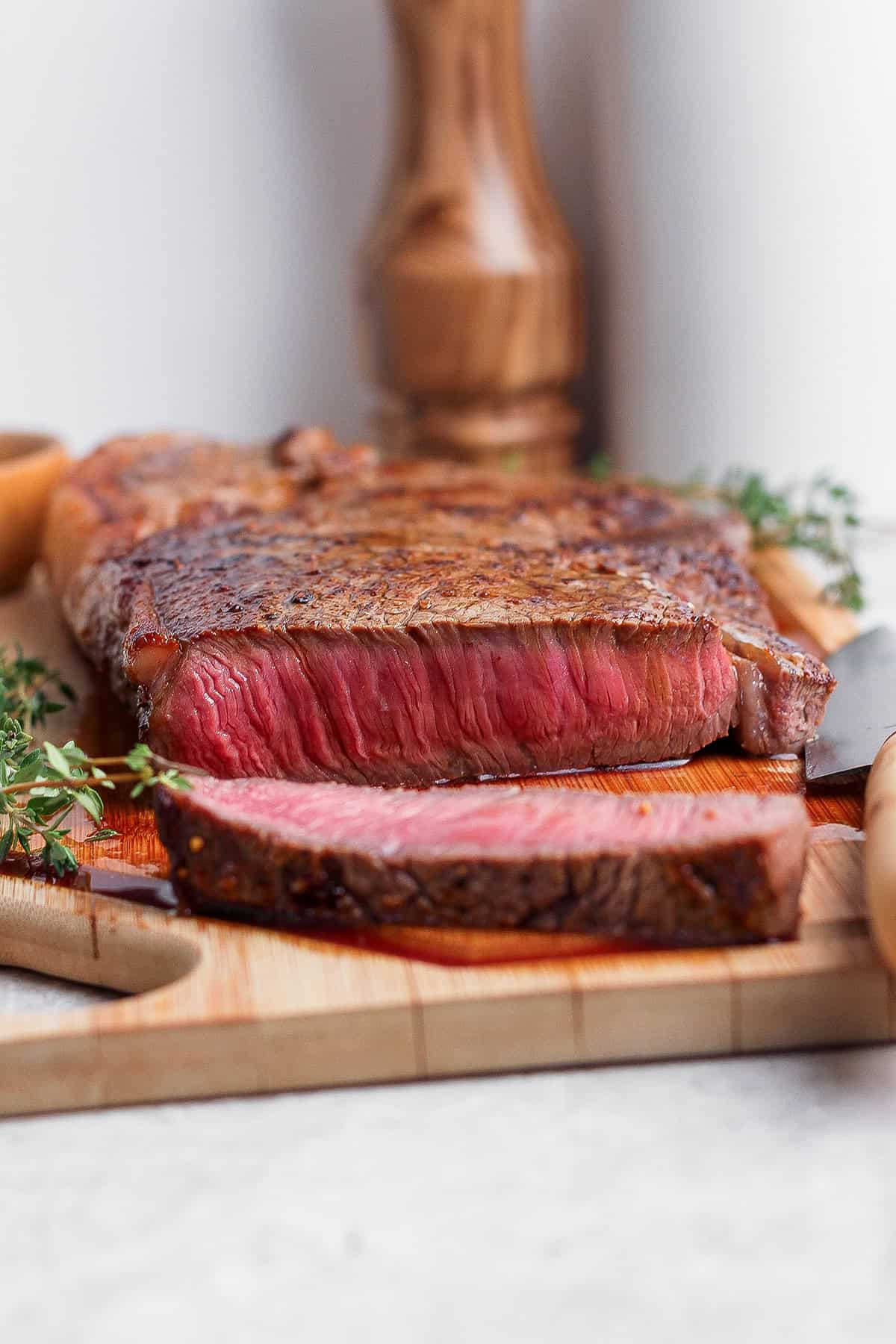
- Juicy, tender steak. Resting and proper timing keep the inside just right.
- Simple ingredients. Just steak, salt, and pepper delivers a delicious steak using this method, but add a couple flavor boosters and you’re at the next level. (In other words, don’t skip the garlic butter!)
- Budget-friendly steak. I cringe at the rising cost of groceries these days. While we still enjoy a super flavorful Grilled Ribeye now and then, Blake and I are reaching for top sirloin much more often. I’m so glad that Blake finally got this skillet steak method perfected, where we can enjoy a fabulous steak meal any time of year!

What You’ll Need
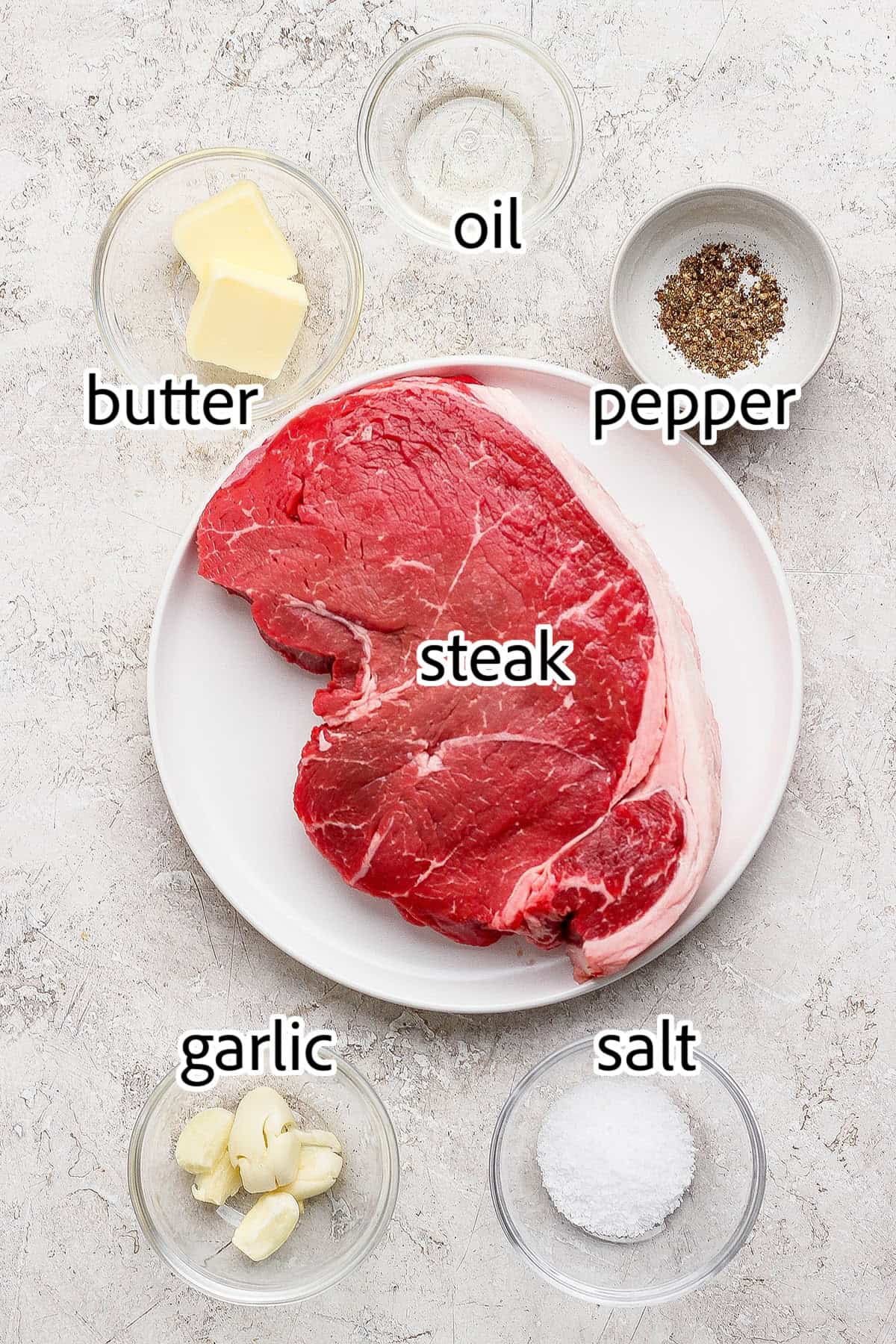
Here’s a quick look at what goes into this cast iron skillet steak. Scroll down to the printable recipe card for exact measurements.
- Steak – Look for top sirloin steak with some fat cap for extra flavor. You could also use ribeye or New York strip steak, which have more fat marbling (will give you more juicy texture and savory, beefy flavor).
- Salt – We use coarse kosher salt (Morton brand). It’s perfect for seasoning and tenderizing.
- Olive oil – Helps adhere the seasoning to the steak and create a great sear.
- Black pepper – Adds warm, pungent flavor that makes the steak pop!
- Butter – We use unsalted butter since we’re already salting the steak itself.
- Garlic – Infuses the butter with savory goodness.
- Avocado oil (optional) – Only needed if your steak doesn’t have much of a fat cap.
How to Cook Steak in a Cast Iron Skillet
Here’s a step-by-step look at how to get perfectly cooked steak on the stovetop.
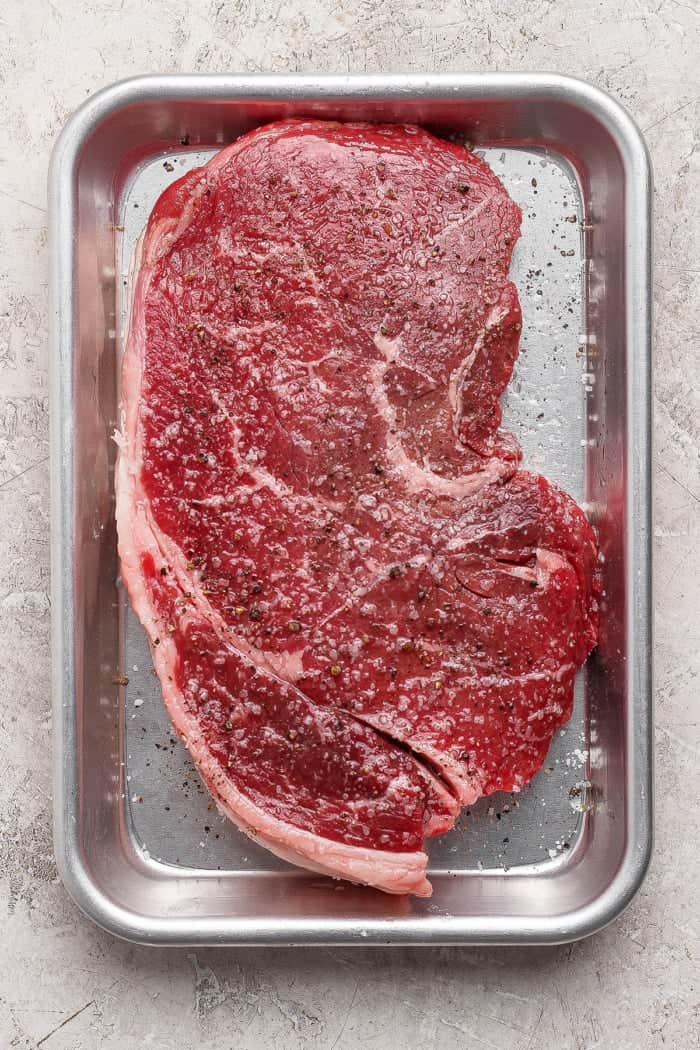
- Season the steak. About 1 hour before cooking, remove the steak from the fridge and place it on a rimmed pan. Season all sides and edges with all of the kosher salt. It might seem like a lot of salt, but just trust this pre-seasoning process. Let it rest at room temperature.
- Prep for cooking. Pat the steak dry with paper towels. Then rub it with olive oil and season generously with black pepper.
- Preheat the skillet. Heat a 12-inch cast iron skillet over medium-high heat for 4 to 5 minutes, until very hot (it may start to lightly smoke).
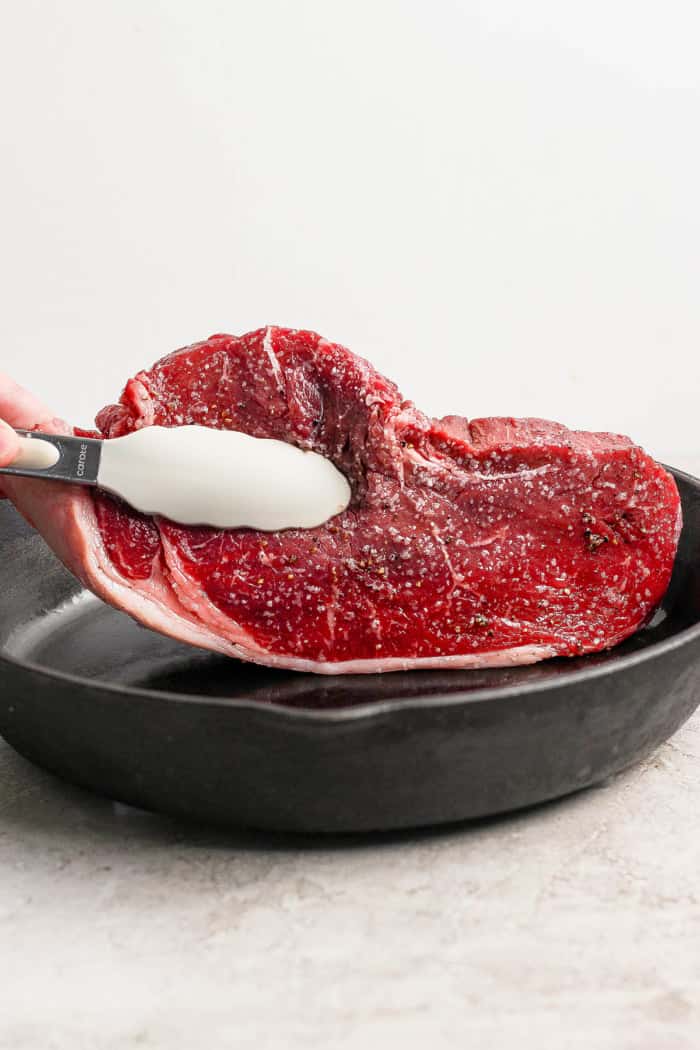
- Render the fat cap. Using tongs, hold the steak upright and press the fat cap against the hot skillet for about 2 minutes, until it begins to render and crisp. You should see the fat “melting” into a liquid and pooling a bit in the skillet.
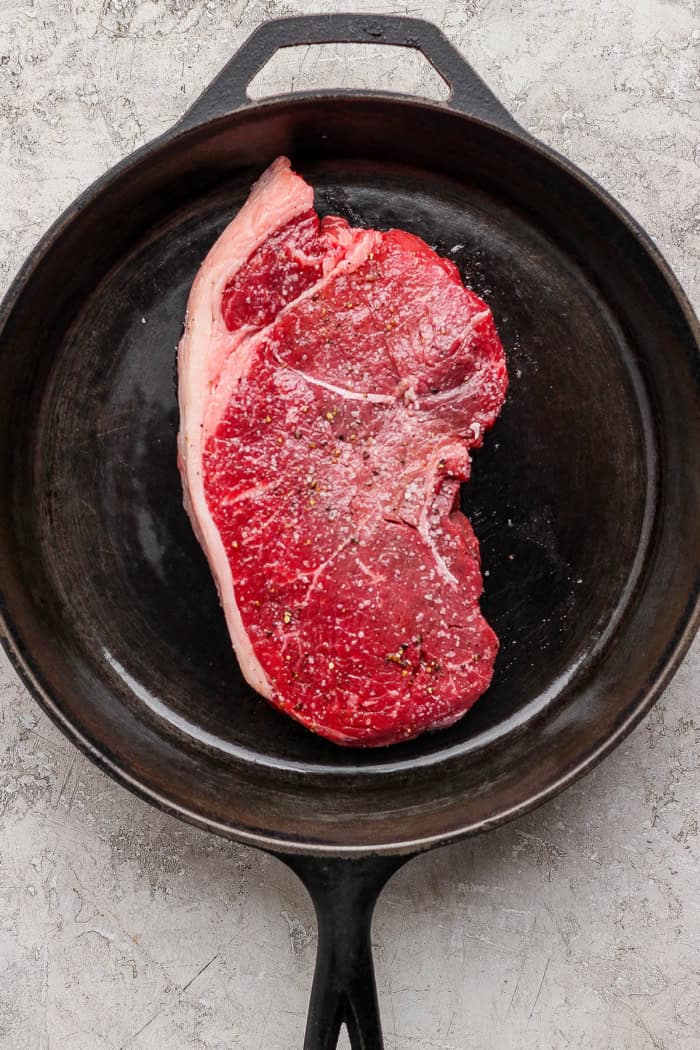
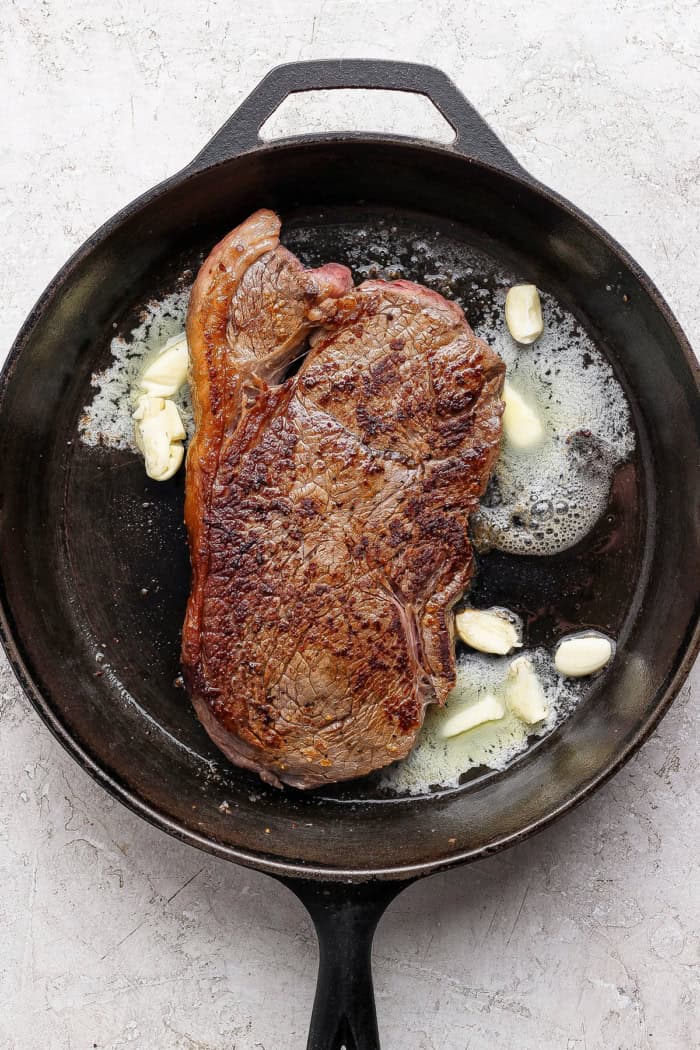
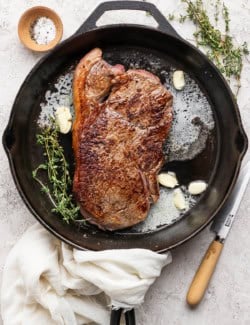
- Sear the steak. Lay the steak flat in the skillet. Cook undisturbed for about 2½ minutes, then flip and cook for another 2 minutes, until both sides have a nice crusted sear.
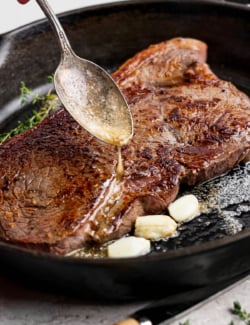
- Baste with butter. Flip the steak again and reduce heat to low. Add the butter and smashed garlic. Tilt the skillet so the butter pools, then spoon it over the steak for about 1 minute.
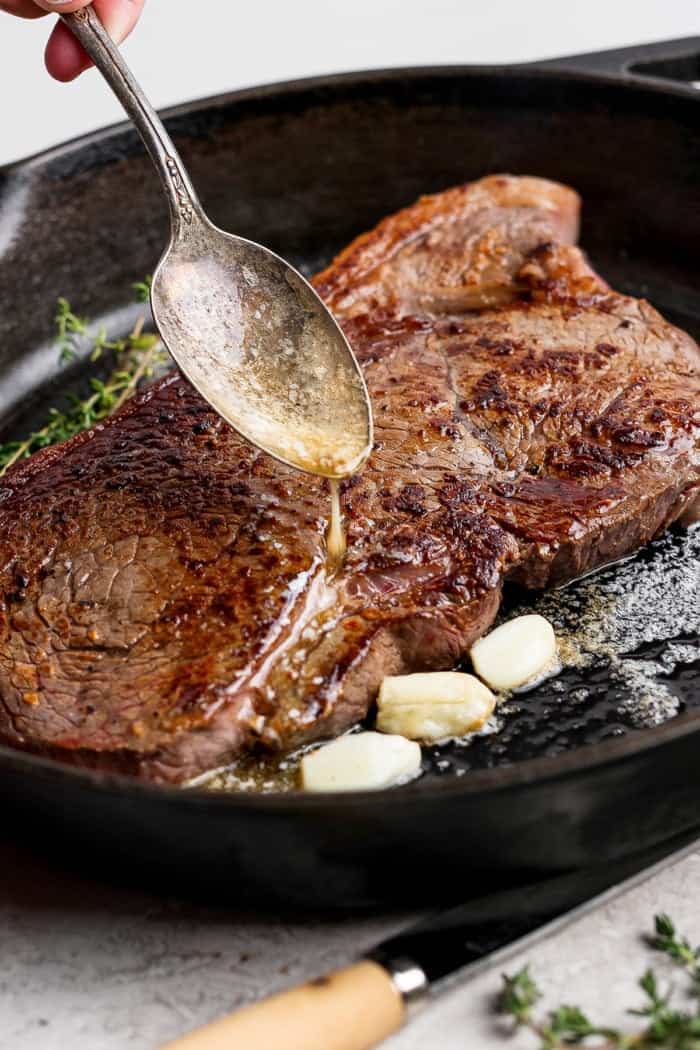
- Continue cooking. Flip and baste again for another minute. Use an instant-read thermometer to check doneness. For medium-rare, cook to 125°–130°F, flipping and basting as needed.
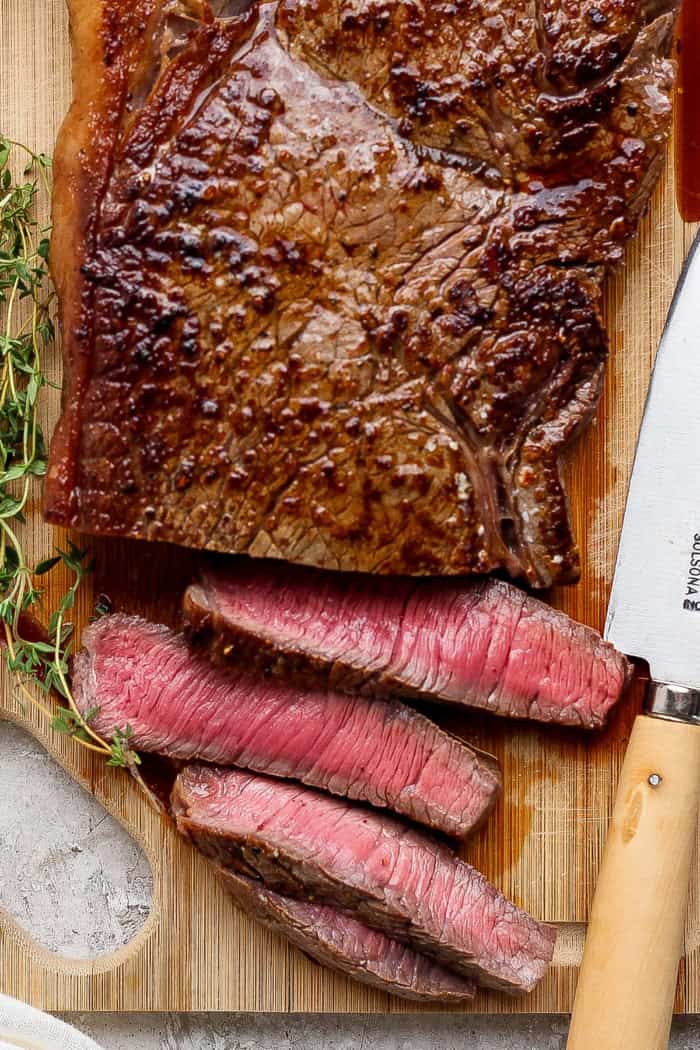
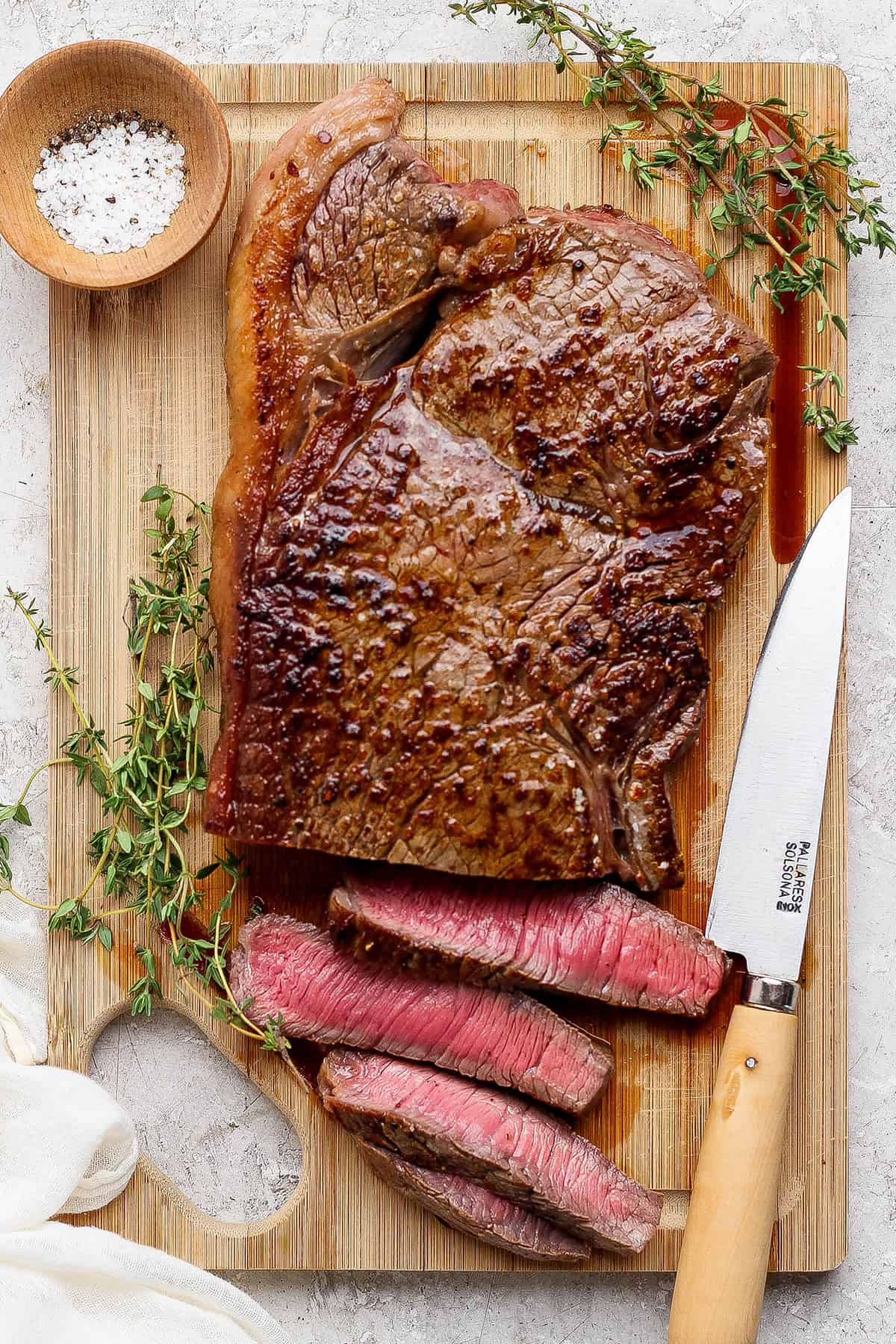
- Rest and slice. Transfer the steak to a cutting board and let it rest for 5 minutes. The internal temperature of the steak will continue to rise a bit as it rests. Medium-rare steak is 130°-135°F. Slice against the grain into thin strips and serve right away.
Blake’s Tips for Perfect Steak on the Stovetop
- Fat cap: Choose a top sirloin with at least some fat cap on it. This adds lots of flavor and juicy texture. If your steak does not have a fat cap, see the recipe card for adding the optional avocado oil.
- Room temperature steak is key. This helps the steak cook evenly throughout. An hour is just right (but even 30 minutes on the counter is better than nothing).
- Salt ahead of time. This helps season the meat all the way through. It really does make a difference.
- Get the skillet hot. A proper sear depends on high heat. The pan should be smoking, and if you splash a drop or two of water on it, it should sizzle crazily and cook off immediately.
- Use a thermometer. It’s the best way to guarantee perfect doneness. Any other method and you’re just guessing. See the Perfect Steak Temperature Guide below, for reference when you’re cooking.
- Let it rest. So important for cooking any meat, not just steak. This helps keep the juices inside the meat, not as much on your cutting board.
Perfect Steak Temperature Guide
Here’s a cooked steak temperature list for you. Just remember to remove the steak from the heat when it’s a few degrees below your ideal temperature, as the steak’s temperature will still rise a bit as it’s resting.
- Rare: 120°–125°F
- Medium Rare: 130°–135°F
- Medium: 140°–145°F
- Medium Well: 150°–155°F
- Well Done: 160°–165°F
Serving Suggestions
This steak pairs well with simple, classic sides like:
- Roasted Red Potatoes, my absolutely perfect Baked Potatoes, or Creamy Mashed Potatoes, for steakhouse vibes.
- Simple vegetable sides, like Roasted Asparagus and sautéed mushrooms.
- Salad, either as a side or slice the steak and add it to a salad. This Balsamic Vinaigrette offers the loveliest contrast to the rich beef.
How to Store
- Refrigerator: Store any leftover cast iron steak in an airtight container for up to 4 days.
- To Reheat: Warm gently in a skillet or microwave. For the juiciest steak, avoid overcooking.
More Recipes for Steak Lovers
Cast Iron Skillet Steak
Ingredients
- 1 top sirloin steak, about 1½ pounds and 1⅛" thick (preferably one that has a bit of a fat cap on its side)
- 2½ teaspoons Morton kosher salt
- 1 teaspoon olive oil
- generous freshly ground black pepper
- 2 tablespoons unsalted butter, cut into 4 pieces
- 2 large cloves garlic, smashed
- 1 teaspoon avocado oil, ONLY NEEDED if your steak does not have a fat cap that renders/melts into the skillet in Step 4. Also see Notes below.
Instructions
- One hour prior to cooking, remove steak from fridge and place on a rimmed pan. Season both sides and entire edge of steak, to include the fat cap, with all of the salt (even using the salt that falls onto the pan). Let rest 1 hour.
- Pat steak dry with a paper towel, then rub olive oil over both sides. Sprinkle a generous amount of freshly ground black pepper over both sides.
- Preheat a 12" cast iron skillet over medium-high heat for 4-5 minutes, or until very hot (and likely smoking).
- Use a long tongs to hold the steak in a vertical position, and rest the fat cap directly on the hot skillet; cook for 2 minutes. (See Notes below if your steak does not have a fat cap.) The fat will start to render — this will make the fat brown/crisp on the edge, plus it will melt and create a thin layer in the bottom of the skillet.
- Now lay the steak flat in the skillet. Cook, undisturbed, for 2½ minutes. (If you have a thinner steak, reduce to 2 minutes.) Then flip the steak and cook, undisturbed, for 2 minutes. This gives a good sear to both sides.
- Flip the steak. Reduce heat to low. Add butter and garlic. Cook for 1 minute while carefully tilting the skillet toward you, so the melted butter pools at the edge of the skillet. Use a large spoon with a long handle to scoop up the butter and pour it over the top of the steak.
- Flip the steak. Cook for 1 minute, while tilting the skillet and spooning the butter again. Now use an instant-read thermometer to test for doneness. For medium-rare doneness, cook the steak to 125°-130°F, which will take about 8 minutes total cooking time. This will have you flipping the steak 1 to 2 more times for 1 minute, tilting the skillet and spooning the butter each time. Just keep checking the temperature each time you flip.
- Once steak reaches 125°-130°F, immediately transfer it to a cutting board (one with a drip groove works great for collecting juices) to rest for about 5 minutes. The temperature will continue to rise as it rests. Medium-rare steak is 130°-135°F. Slice against the grain into ¼"-thick strips. Serve right away.
Notes
- Prep: Be sure to prep ahead by letting the steak rest, seasoned with salt, on the counter for 1 hour. This brings it to room temperature so it cooks quicker and more evenly, and lets the salt absorb deeper for better flavor throughout.
- Sear: For a great sear, it is very important to let the skillet get VERY hot before you start.
- Fat cap: I recommend purchasing a top sirloin with at least some fat cap on it, for extra flavor and texture. If your steak does not have a fat cap, skip Step 4 and add 1 teaspoon of avocado oil to the skillet instead. Once it’s shimmering hot, proceed with Step 5.
- Doneness: Focus on the doneness you prefer and not exact timings, as different variables will require more or less cook time. Temperature of steak and skillet, thickness and total weight of steak, amount of fat marbling, exact flipping times, etc — all of this is going to vary. Just keep using your thermometer to check doneness.

get new posts via email: