
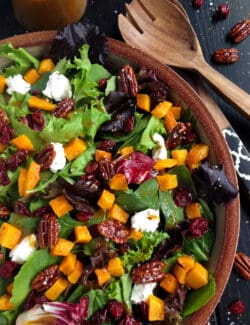
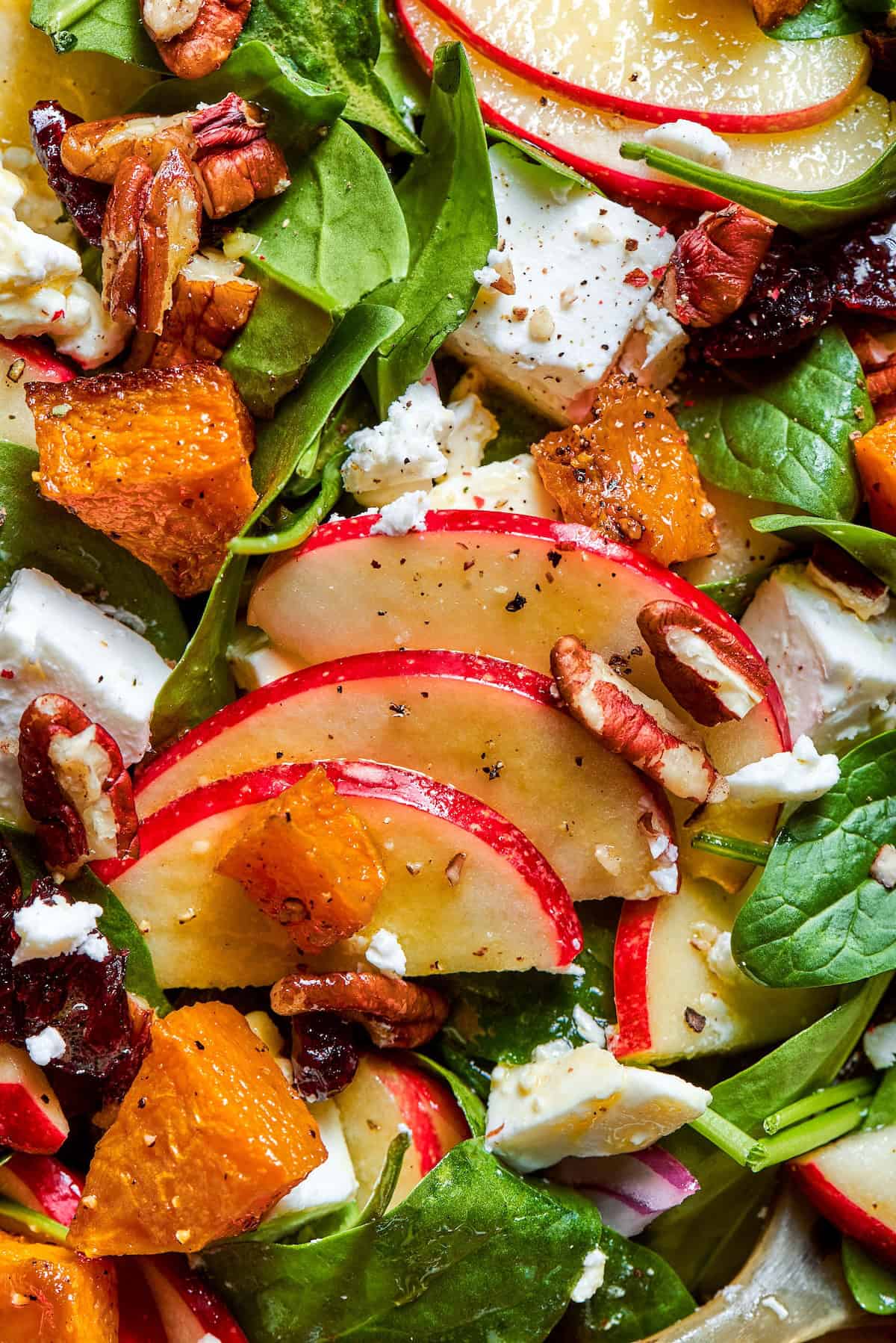
This Fall Harvest Salad recipe combines fresh greens and apples with roasted butternut squash, pecans, dried cranberries, and goat cheese, all tossed together with a lively apple cider vinaigrette. It’s gorgeous for fall and winter, and the perfect Thanksgiving side salad!

This Fall Harvest Salad brings me so much joy every year. It’s not only a pretty dish to pass around the table, but also incredibly tasty. Packed with variety in flavor and texture galore, this easy fall salad has fresh greens, sweet and tender roasted squash, crisp apples, tart cranberries, and creamy goat cheese – plus pecans for salt-sprinkled crunch. And the Apple Cider Vinaigrette brings it all together in the most wonderful way. There’s heaven in every bite!
Why You’ll Fall In Love With This Fall Harvest Salad
When all the “heavier” comfort foods of fall and winter are on the table, I always aim to offer at least one dish that’s lighter and super fresh-testing. It makes for delightful contrast on the plate. This Shaved Brussels Sprouts Salad and my Holiday Wild Rice Salad are a couple other great choices. Here’s more on what makes this salad so awesome:

- Holiday-worthy. This is one of my favorite fall and winter salads, and I often serve it for Thanksgiving because it’s pretty and special and downright delicious. Guests always say how much they like it and ask for the recipe.
- Prep it ahead. If desired, you can mostly prepare this salad in advance and then assemble right before the meal. It just doesn’t get any better than that! (Scroll down to the section “Make Ahead and Storage for my recommendations on this.)
- Easy to make heartier. To make this a main dish salad, I often add chicken or steak, or a plant-based protein. This adds stick-with-you, fill-you-up satisfaction. (See the section “Tips & Variations” for more ideas.)
Enjoy!

What You’ll Need
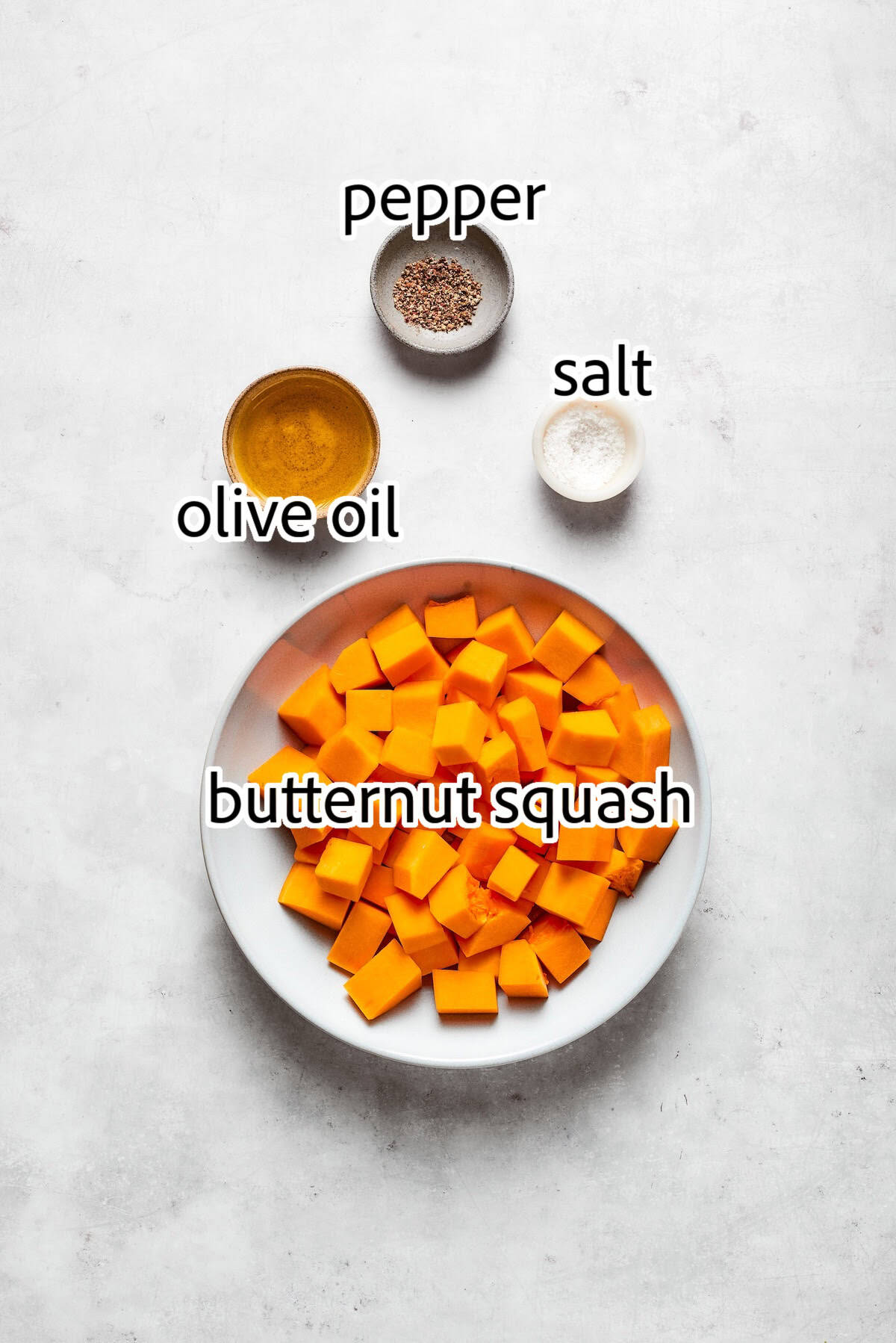
The salad itself calls for a handful of delicious fall-themed ingredients, plus one of my favorite salad dressings. I’ve included notes on what you’ll need below, and I’ll start us off with the ingredients for roasting the butternut squash. Scroll to the printable recipe card for the full list with amounts and recipe details.
For the Butternut Squash
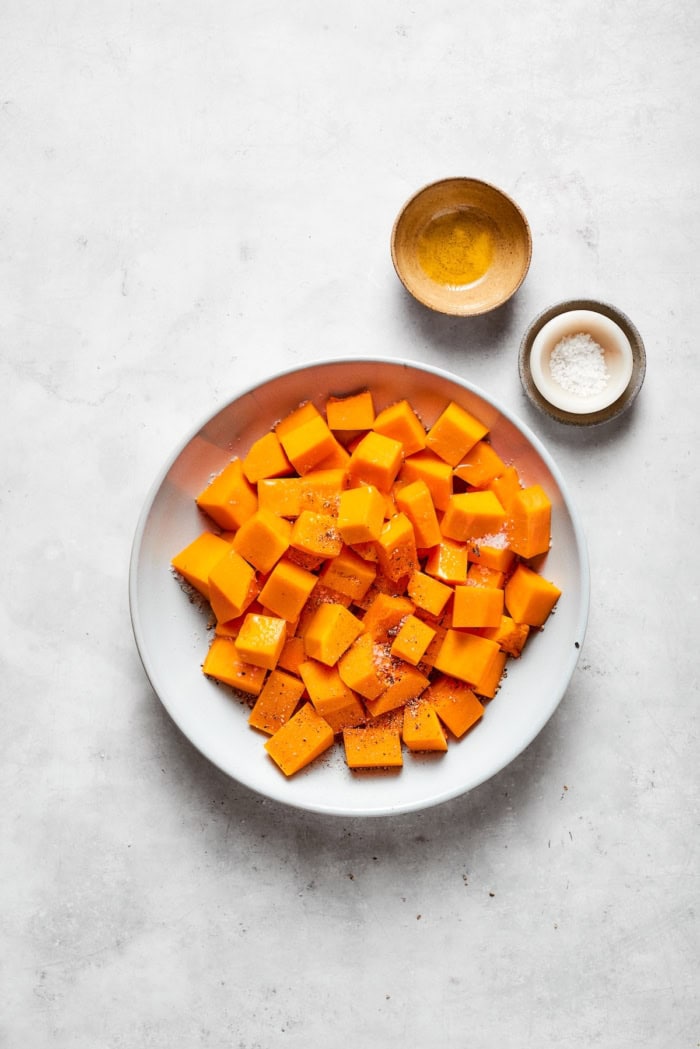
- Butternut squash – Peel the squash, remove the seeds, and cut it into half-inch cubes. Many grocery stores sell already chopped butternut squash, especially during the holidays, if you’re looking for a shortcut.
- Olive oil – This helps the squash caramelize and not stick to the pan, and adds lovely flavor.
- Salt & pepper – Super simple seasoning is all that’s needed.
For the Salad
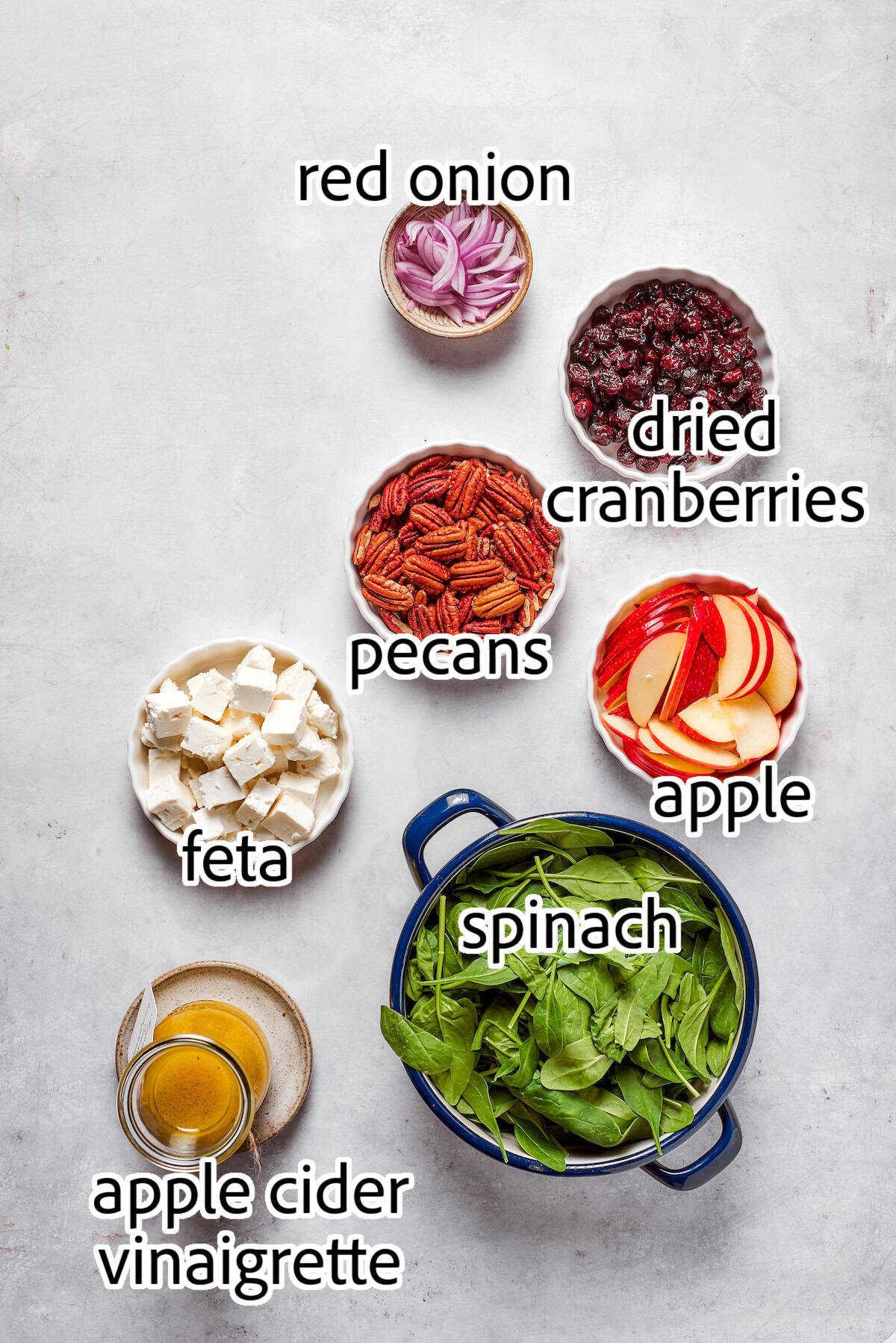
- Apple Cider Vinaigrette – I think this salad is perfect with this dressing – but if you’d like a couple other options, see the section below Can I Use Another Dressing?
- Fresh greens – I prefer sturdier greens for this salad because they feel heartier for the season, plus they hold up well to the all the mix-ins. Spinach and arugula are my favorites.
- Apples – Crisp, juicy, sweet-tart apples add so much life to this salad! Honeycrisp apples are widely available, and a great choice.
- Dried cranberries – I love the sweet chewiness and festive touch that cranberries add, which is especially wonderful during the holidays. You could substitute dried cherries, blueberries, or raisins.
- Pecans – These add salty, crunchy yummy-ness.
- Feta cheese – Use crumbled or cubed feta cheese. Creamy goat cheese crumbles or shaved Parmesan also works well here. Or, if you’re a fan of funky blue cheese, try swapping in gorgonzola.
- Red onion – This adds another element of freshness. In small quantity, it adds just the right amount of contrasting bite.
How to Make This Harvest Salad
First, you’ll want to roast the butternut squash. Here’s how to do it:
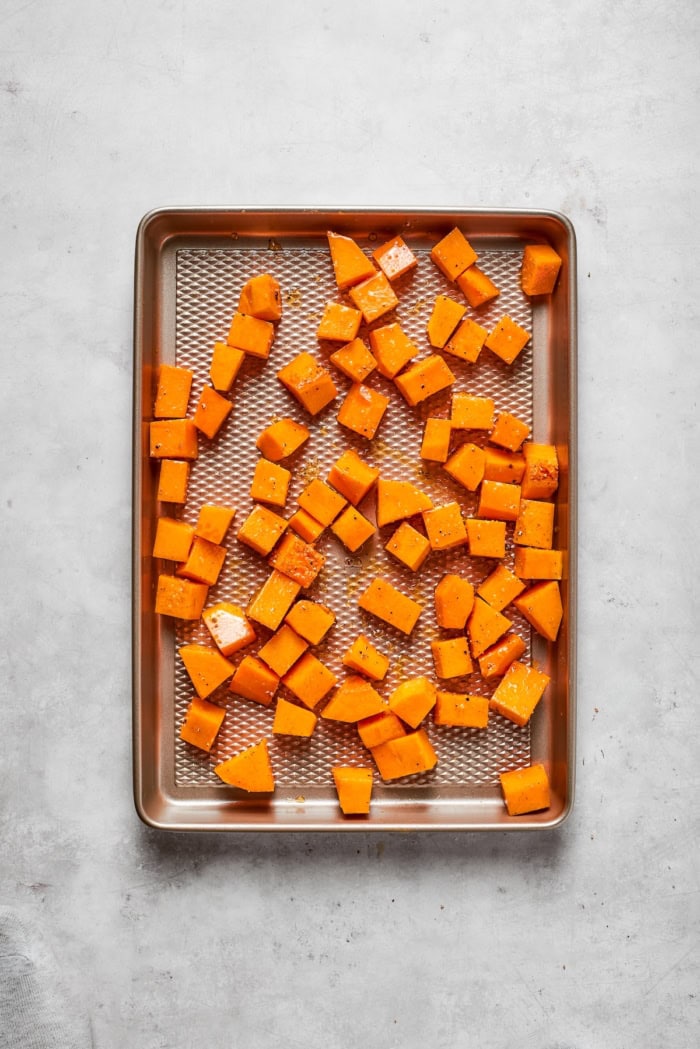
- Roast the squash. First, toss the squash with olive oil, salt, and pepper. Roast at 375ºF for about 15 minutes. Then let it cool completely before adding it to the assembled salad.
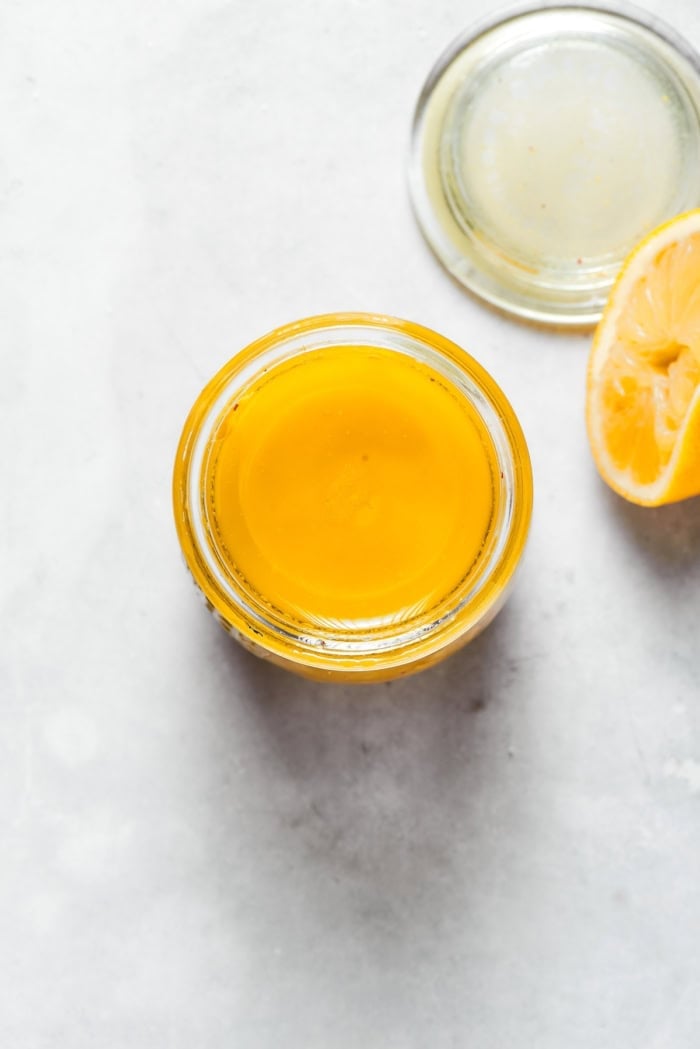
- Make the vinaigrette. In a bowl, whisk together the Apple Cider Vinaigrette ingredients. Set aside.
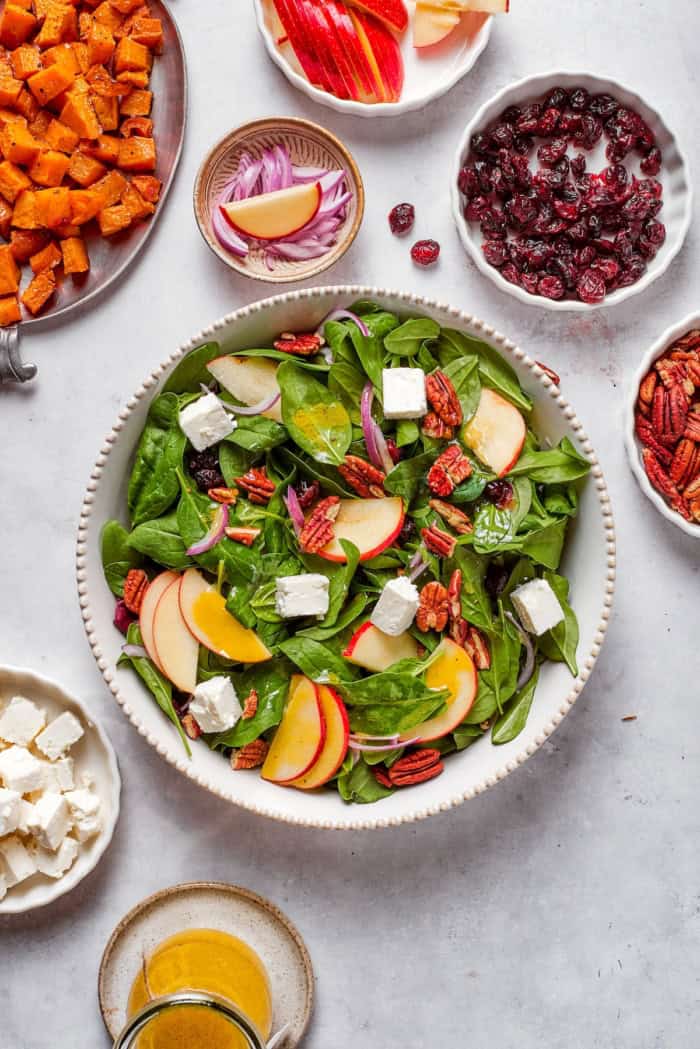
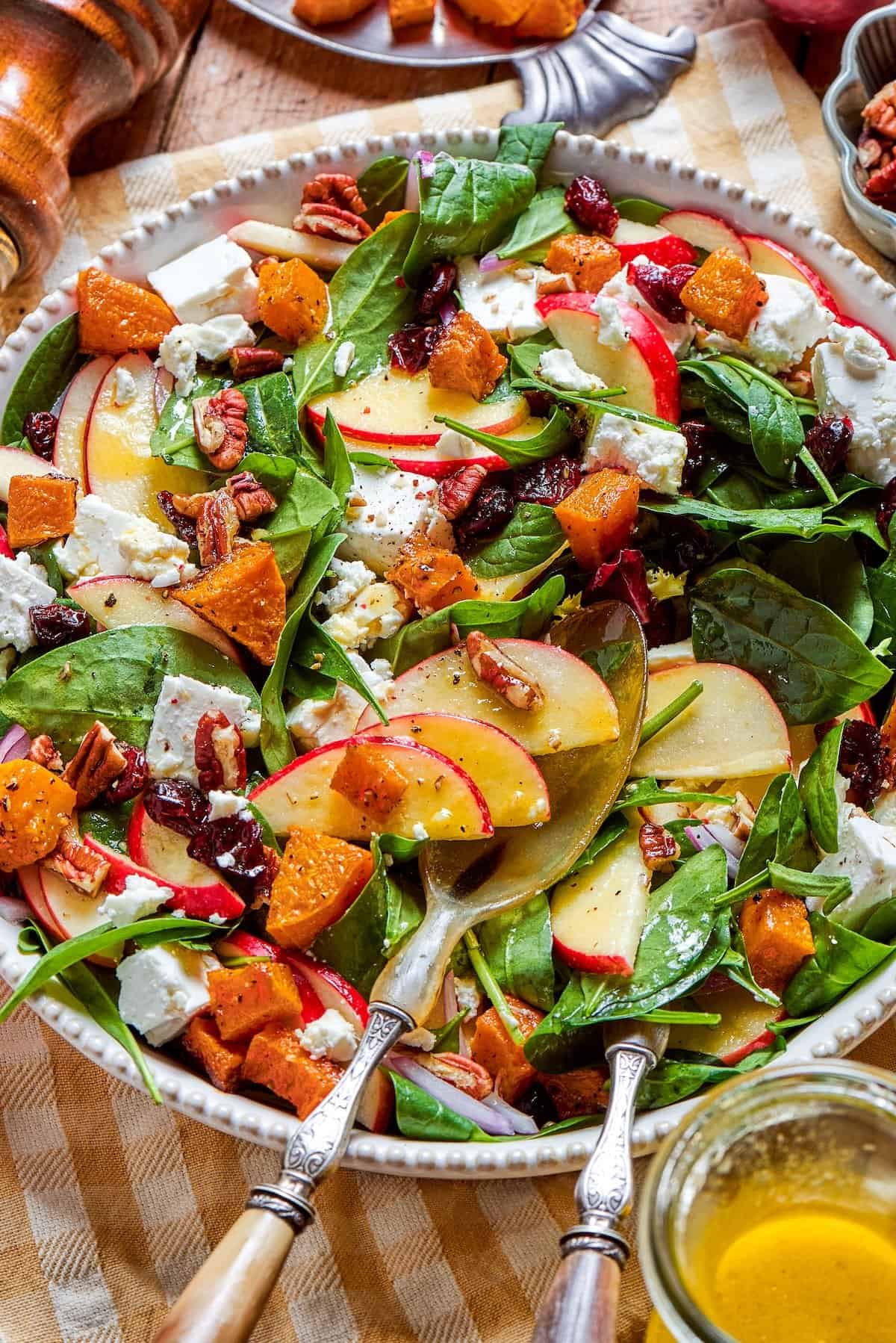
- Assemble the salad. When it’s time to serve, arrange half the greens in a salad bowl. Drizzle the leaves with a little vinaigrette, then add half of the squash, apples, cranberries, pecans, feta, and onion. Repeat the layers with the remaining ingredients.
- Finish and serve. Finish with a sprinkle of salt & pepper. Serve with additional vinaigrette on the side, and enjoy!
Can I Use another Dressing?
Absolutely. If you’d prefer to swap out the curry and fig vinaigrette for another easy salad dressing, I’d recommend a classic Balsamic Vinaigrette or this Maple Dijon Dressing. The flavors complement the ingredients in this fall salad perfectly.
Tips & Variations
- Let the roasted squash cool. Keep in mind that you’ll want to allow time for the roasted squash to cool before assembling the salad. If you add hot squash, it will wilt the greens and melt the cheese.
- Make the dressing a day in advance. If possible, make the dressing ahead of time. Left to mingle in the fridge for a day, the flavors in the vinaigrette marry even more.
- Use a bottled dressing. If you have a favorite bottled dressing that would pair well with the flavors in this salad, go for it!
- Add protein. Sprinkle in cooked crumbled bacon. Or add slices of leftover cooked chicken or Grilled Ribeye. You could also bulk up this salad with plant-based protein, such as roasted chickpeas, or cooked wild rice or quinoa.
Serving Suggestions
As I mentioned, this is a great salad to serve on Thanksgiving Day, next to your Grilled Turkey Tenderloin or Crockpot Ham and Gravy, with Spoon Bread and all of the Thanksgiving fixings. It’s a pop of fresh flavor and color, and always a very welcomed option.
You could also make this salad to enjoy with turkey leftovers in recipes like my Creamy Wild Rice Soup, Leftover Turkey Casserole, or Turkey à la King. Make a whole new, exciting meal on the day after Thanksgiving!
Aside from Thanksgiving day, I highly encourage you to enjoy this salad all fall and winter long. It’s great alongside Grilled Pork Chops or Baked Pork Chops & Stuffing. Or Sugar Grilled Steak, or this beautiful Mustard Pork Loin Roast!
Fall Harvest Salad with Apple Cider Vinaigrette
Ingredients
Butternut Squash
- 3 cups ½"-diced butternut squash (peel squash and remove seeds first)
- 2 teaspoons olive oil
- kosher salt
- freshly ground black pepper
Salad
- Apple Cider Vinaigrette
- 5-8 ounces baby spinach (or arugula)
- 1 large crisp, juicy, sweet-tart apple, cored and thinly sliced (see Notes below for variety suggestions)
- ½ cup dried cranberries (or dried cherries, blueberries, or raisins)
- ½ cup roughly chopped roasted & salted pecans (I like Trader Joe's brand)
- 4 ounces ½"-diced block feta
- ¼ cup thinly sliced red onion
- kosher salt
- freshly ground black pepper
Instructions
Butternut Squash
- Preheat oven to 400°F.
- Add diced butternut squash to a rimmed baking pan. Drizzle with olive oil, then sprinkle fairly generously with salt & pepper. Fold to coat evenly.
- Roast for 15 minutes, or until tender, flipping halfway through.
- Remove pan from oven and let squash cool completely.
Assemble the Salad
- Make the Apple Cider Vinaigrette; set aside.
- Add half the spinach to a serving bowl. Then layer on half the squash, apple, dried cranberries, pecans, feta, and onion. Add the remaining spinach, followed by the remaining rest of the ingredients. Finish with a sprinkle of salt & pepper. Serve the Apple Cider Vinaigrette on the side, for individuals to add to their own portion as much as they like.
Notes
- Roast the butternut squash in advance. You can batch-roast the butternut squash and store it in the freezer for up to 2 months. Just allow it to thaw before assembling the salad.
- Make the dressing in advance. You can make the apple cider vinaigrette a day or two in advance as well. Store in the fridge in a tightly sealed glass jar.
- Prep & measure other ingredients. If desired, chop and measure out the pecans, and place them in an airtight container. Do the same with the cranberries. Chop the feta, place in an airtight container, and then refrigerate.
- Store the salad. Leftover salad can be stored, covered, in the fridge for up to 2 days. Just be aware that the longer it sits, the less crisp the ingredients may be. If you plan on having leftovers, I recommend serving the vinaigrette on the side and adding it to the individual salads.
My Inspiration for this Recipe
Following is a little recap from my trip to California Olive Ranch, where I got to see how they make olive oil. This is where I was inspired to create my Fall Harvest Salad recipe!
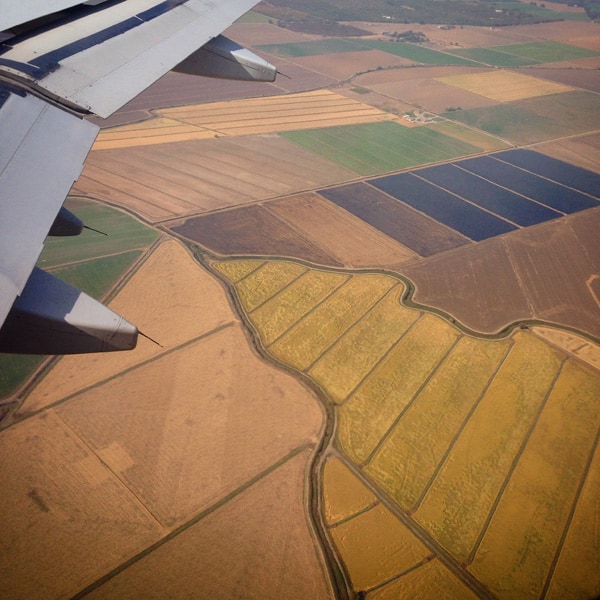
Traveling opens up my world and fills it with new experiences and landscapes. I was so thankful to have a window seat on this flight. The skies were clear, letting me see the rise and fall of mountains as I traveled from Minnesota to California. This gorgeous quilt of agriculture, just east of Sacramento, had me staring in awe.
The Olive Harvest
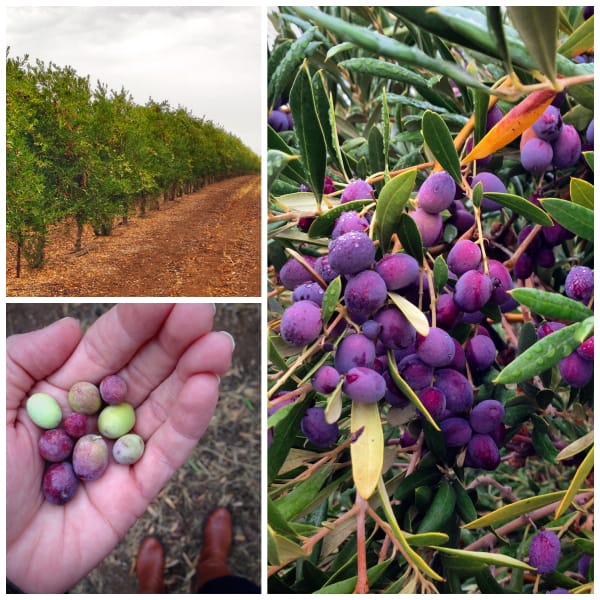
We ventured north of Sacramento to California Olive Ranch, about a 90 minute drive, and started by walking the beautiful rolling olive orchards.
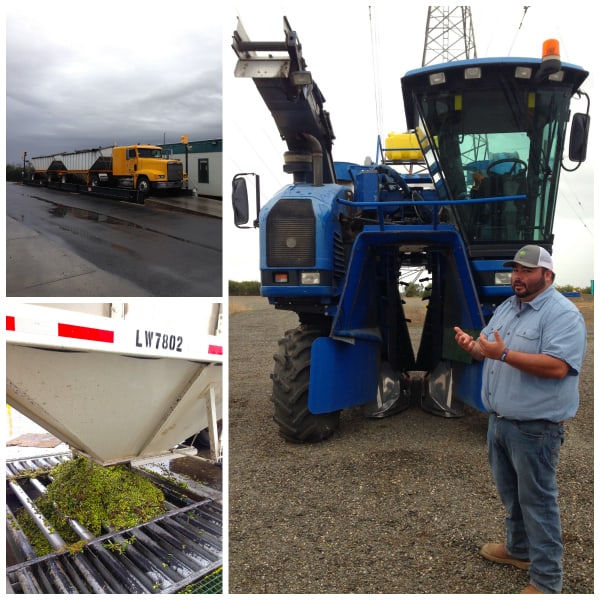
Harvesting olives in California dates back 300 years, when the Spanish brought over the first olive trees. Raised more like a vineyard than an orchard, olives are a low maintenance crop, pollinated by the wind and able to thrive on low water consumption.
The olive harvester (photo: above, right) can pick an olive tree clean in just 5 minutes, yielding about one finished bottle of olive oil.
How Olives are Processed Into Oil
Once picked, the olives are transferred to a truck and then brought in for processing (photos: above, left), assuring the freshest olive oil possible from field to bottle in just 6 to 8 hours. The olives are graded for maturity and then ground, pit and all, to measure fat and moisture levels.
Each step of the process tracks exactly which olive variety (California Olive Ranch grows three different varieties of olives) is being processed, the farm it came from, plus the date and time, for full traceability. Every bottle of oil from California Olive Ranch displays the date the olives were harvested.
And nothing goes to waste. The olive leaves and post-press mash is used for feed at nearby cattle ranches.
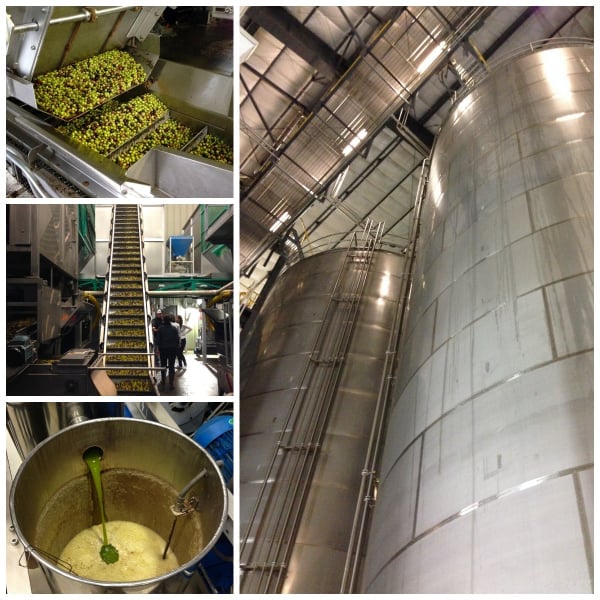
California Olive Ranch prides itself in the superior quality of its extra-virgin olive oils. Where some companies mill and sell olive oils from two to four separate presses, California Olive Ranch does just one with a cold pressing process, yielding the highest quality olive oil for each and every bottle.
The pressed olives produce a fabulous green colored oil that mellows out to a straw yellow hue over time (photo: above, lower left).
Once pressed, the olive oil is stored in gigantic stainless steel temperature controlled tanks (photo: above, right), protecting the oil from its enemies of oxygen and light. Each olive oil variety is isolated to its own tank. Then as orders come in throughout the year, the oil is blended and sent out.
Taste-Testing Olive Oil
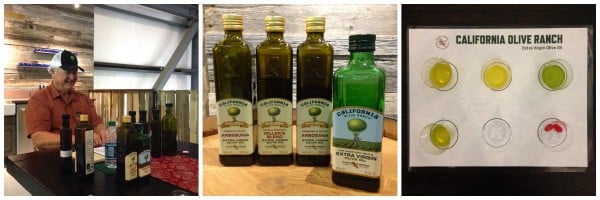
We had the pleasure of sitting down with Bob Singletary, the very impassioned head miller at California Olive Ranch. He creates the olive oil varieties and tastes every single batch of olive oil pressed there.
Bob taught us the basics of olive oil tasting, sharing that extra virgin olive oils should never have heavy or greasy qualities, and that different types of olives make distinct types of olive oil. He showed us how to first identify the olive oil with our nose and then with our taste buds with a sip-slurp-swallow technique. We determined a variety of flavors, from grassy to pungent, to biting and bracing.
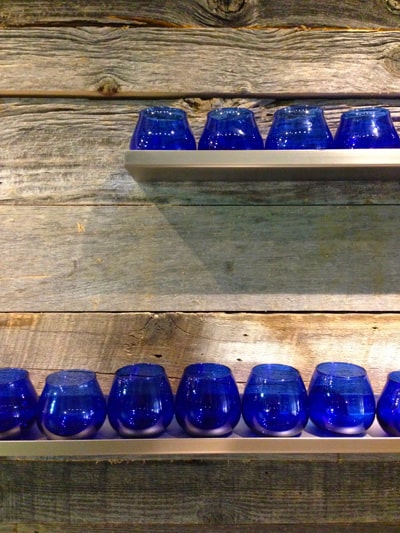
When Bob and others are doing serious taste testing for quality control, these cobalt blue glasses are used so the tasters aren’t influenced by the color of the oils!

Definitely trying this as soon as I can!
This is such a beautiful salad, Brenda. Love and blessings to you and your family this next week ahead! ps. looks like a great trip, too!
Thanks, Sandy. And a happy Thanksgiving to you and yours! xo
I love salads like this one. It’s beautiful and full of filling and delicious ingredients. Pinning :)
Thanks again for your visit, Brenda! It was so lovely to see you again. So appreciate your making the trip out west!
It was my pleasure, Kirsten. Thanks for the wonderful hospitality. Happy Thanksgiving to you and yours!
We’ve been doing tons of butternut squash-y things lately, and I’m loving the fall food (though not the freezing MN winter that is here a bit too early)… this salad shouts fall all over the place, and you made it look absolutely delish :)
Thank you so much, Amy. :)
As a salad lover, I was so excited to see this on Foodgawker! It has all of my favorite ingredient thrown together, and that makes it awesome! Can’t wait to try!
Thank you so much – I hope you like it, too!
Loving this pretty fall salad. Nice recipe!